Delhi Fuel Rule Changed: What Is the New Rule?
Delhi Fuel Rule Changed — In a major step to curb rising air pollution, the Delhi government has announced that petrol and diesel will no longer be sold without a valid Pollution Under Control (PUC) certificate. This rule aims to strictly regulate vehicle emissions and reduce the harmful impact of vehicular pollution in the national capital.
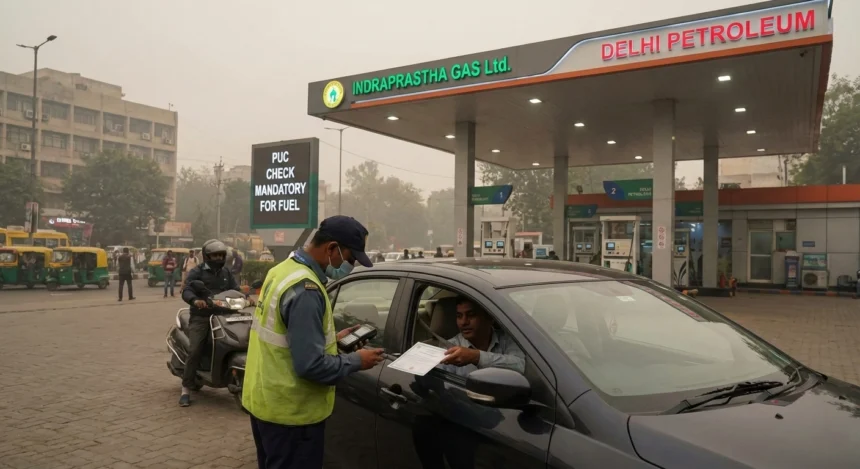
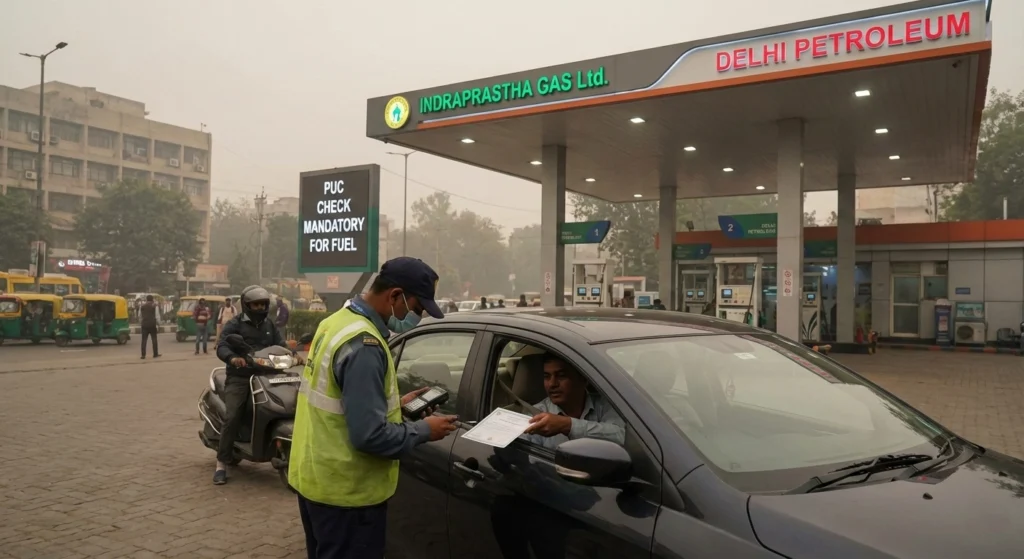
Under this new regulation, vehicle owners must show a valid PUC certificate at petrol pumps before refuelling. Vehicles that fail to meet emission standards or do not possess a valid certificate may be denied fuel altogether. This move marks a significant shift from earlier practices where PUC rules existed but enforcement was weak.
Why the Delhi Government Introduced This Rule
Delhi continues to struggle with severe air pollution, especially during winter months when the Air Quality Index (AQI) often reaches hazardous levels. Medical experts and environmental agencies have repeatedly warned that prolonged exposure to polluted air increases the risk of asthma, lung infections, heart disease, and premature death.
Studies indicate that vehicular emissions contribute nearly 40% of Delhi’s total air pollution. Many vehicles on the road are poorly maintained and emit excessive smoke due to expired or ignored pollution checks. By enforcing the Delhi Fuel Rule Changed, the government intends to ensure that only vehicles complying with emission norms remain operational, thereby reducing pollution at its source.
For Official Announcement visit here : Delhi Transport Department
How the New Fuel Rule Will Be Implemented
The implementation of the new rule will take place at multiple levels to ensure strict compliance. Petrol pumps across Delhi will be instructed to verify the PUC certificate before dispensing petrol or diesel. Pump operators may manually check certificates or use digital verification systems linked to vehicle numbers. Authorities are also expected to conduct random inspections and audits at fuel stations. In the future, this system may be integrated with centralized databases to automatically validate vehicle emission status.
Vehicles without valid PUC certificates will be asked to get their emissions tested before refuelling.
Vehicles Covered Under This Rule
The Delhi Fuel Rule Changed applies to almost all fuel-based vehicles, including Private cars, Two-wheelers, Taxis and app-based cabs, Commercial vehicles, Diesel trucks and buses.Both petrol and diesel vehicles fall under this regulation. Only electric vehicles and certain exempt categories may be excluded.This wide coverage ensures that pollution control measures are applied uniformly across the city.
Also read this : 8th Pay Commission Salary Hike
Why a Valid PUC Certificate Is Important
A Pollution Under Control (PUC) certificate confirms that a vehicle’s emissions are within the limits prescribed by environmental authorities. It indicates proper engine performance and responsible vehicle maintenance. Although the PUC certificate has always been mandatory under Indian motor vehicle laws, enforcement has been inconsistent. The Delhi Fuel Rule Changed transforms PUC from a routine document into a daily necessity for vehicle owners. Regular PUC checks also help drivers identify engine problems early, improving fuel efficiency and reducing long-term repair costs.
Penalties for Not Having a PUC Certificate
Vehicle owners who do not comply with the new rule may face multiple consequences:
Denial of petrol or diesel at fuel stations
Traffic fines ranging from ₹1,000 to ₹10,000
Legal action for repeated violations
Possible vehicle seizure in extreme cases
Authorities have clarified that ignorance of the rule will not be accepted as an excuse. Repeat offenders may face stricter penalties.
Impact on Daily Commuters and Commercial Drivers
Initially, daily commuters and commercial drivers may experience inconvenience, particularly those who have ignored PUC renewals. Long queues at emission testing centers are also possible during the initial phase of implementation.
However, in the long run, the rule is expected to promote better vehicle maintenance, smoother traffic flow, and cleaner air. Commercial drivers, taxi operators, and delivery partners will benefit from improved vehicle efficiency and reduced breakdowns.
The Delhi Fuel Rule Changed prioritizes long-term public health over short-term discomfort.
Environmental and Health Benefits Expected
Environmental experts believe this rule could significantly reduce vehicular pollution in Delhi. Cleaner vehicles mean lower emissions of carbon monoxide, nitrogen oxides, and particulate matter.
Expected benefits include,Improved air quality index (AQI), Reduced respiratory and cardiovascular diseases, Healthier living conditions for children and elderly citizens, Lower healthcare burden on the system.This rule aligns with India’s broader commitment to sustainable development and environmental protection.
What Vehicle Owners Should Do Immediately
To avoid inconvenience, vehicle owners in Delhi should take the following steps without delay Check the validity of your PUC certificate, Renew expired certificates immediately, Get regular vehicle servicing done, Carry a digital or physical copy of the PUC certificate, Ensure emissions are within permissible limits.
PUC testing is affordable and available at authorized centers and many petrol pumps across the city.
Additional Important Information
PUC certificates are generally valid for six months.Online PUC verification is available through government portals and CNG vehicles also require valid PUC certificates.Electric vehicles are exempt from emission checks.Being proactive can save time, money, and legal trouble.
Conclusion: Delhi Fuel Rule Changed Is a Necessary Step
The decision to deny petrol and diesel without a pollution certificate reflects a serious commitment to fighting air pollution. While strict, the Delhi Fuel Rule Changed promotes responsible vehicle ownership and prioritizes public health.
For Delhi residents, maintaining a valid PUC certificate is no longer optional—it is essential for daily mobility. Cleaner vehicles today mean healthier lives tomorrow.