
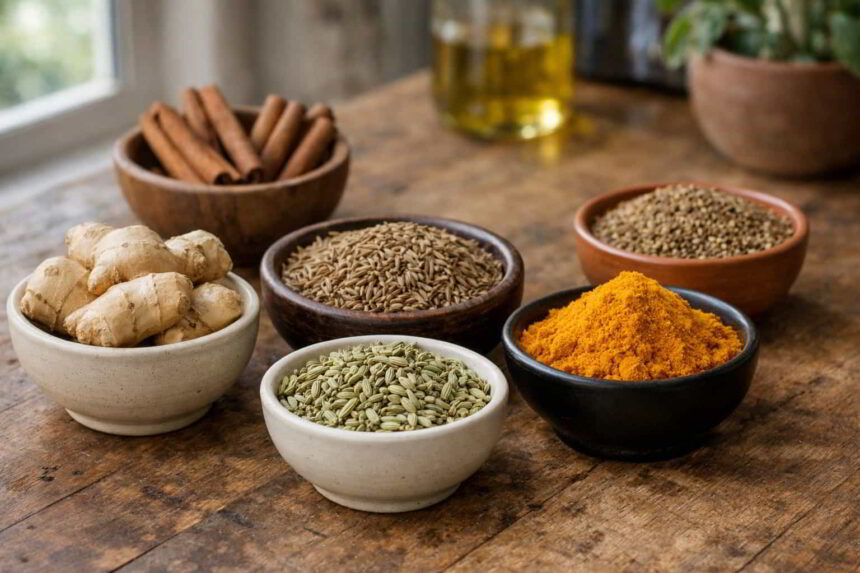
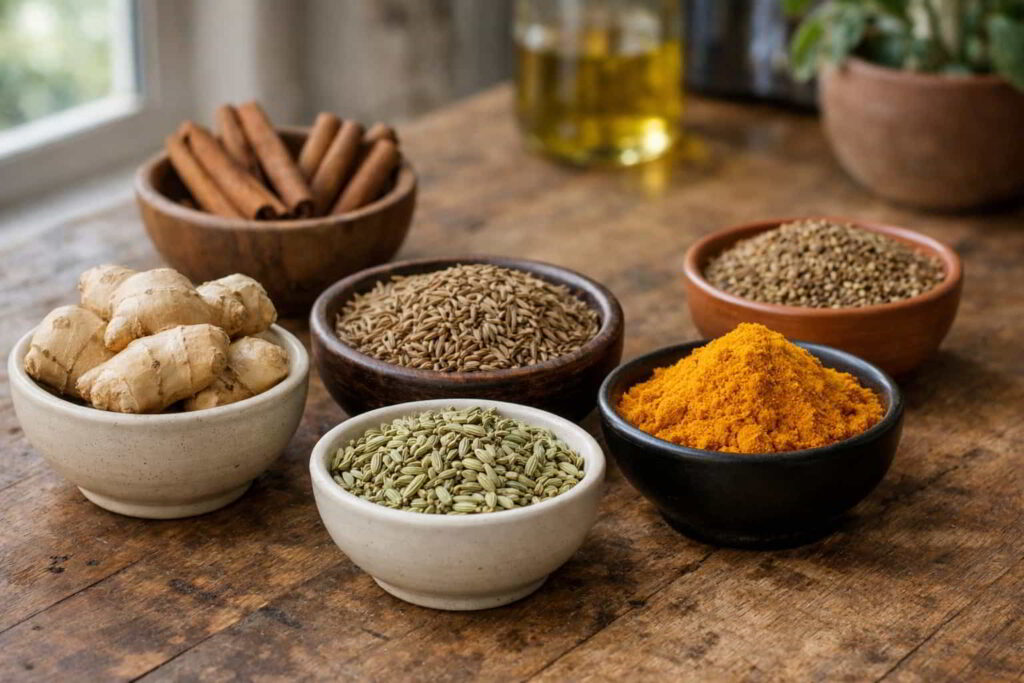
Why Gut Health Starts in Your Kitchen
Gut Health Spices -Digestive problems such as bloating, gas, acidity, and heaviness after meals have become common in modern lifestyles. Long working hours, irregular eating habits, stress, and low fibre intake all affect gut health. While medications are often used to manage digestive discomfort, many people overlook the powerful role of everyday kitchen spices.
Indian kitchens are rich in traditional spices that have been used for centuries not just to enhance flavour but also to support digestion. Among them, ginger is one of the most well-known, but it is far from the only one. According to gastroenterologists, several common spices can naturally improve digestion, stimulate digestive enzymes, and reduce bloating after meals when used correctly.
To understand this better, HT Lifestyle spoke with Dr Girish P Veeranna, Consultant – Medical Gastroenterology and Hepatology at Aster RV Hospital, Bengaluru, who explained how certain gut health spices can gently support the digestive system as part of a balanced diet.
How Spices Support Gut Health Naturally
Dr Girish explains that spices have long been valued in traditional medicine systems because of their digestive, anti-inflammatory, and carminative properties. These properties help reduce gas formation, improve nutrient absorption, and support the overall functioning of the gastrointestinal tract.
He emphasises that spices are not a replacement for medical treatment, but when used in normal dietary amounts, they can complement healthy eating habits and provide daily digestive support. Regular use of the right spices may help reduce post-meal bloating, improve appetite, and keep digestion smooth
Also read this : Amazing Benefits of Eating One Avocado Every Day for 30 Days
Ginger: The Most Popular Spice for Digestion
Ginger, known as adrak in Hindi, is one of the most researched spices for gut health. It is widely recognised in modern medicine for its anti-inflammatory and digestive benefits. Ginger helps speed up gastric emptying, which means food moves more efficiently through the digestive tract.
Dr Girish notes that ginger can help reduce nausea, bloating, and indigestion after meals. It also supports the secretion of digestive enzymes, making it especially helpful for people who feel heaviness or discomfort after eating. Ginger can be consumed fresh, added to curries, or taken as ginger tea for digestive relief.
Cumin: A Powerful Digestive Enzyme Booster
Cumin, or jeera, is another essential spice for digestion. According to Dr Girish, cumin stimulates the production of digestive enzymes that help break down food more efficiently. This improves nutrient absorption and reduces the likelihood of gas and bloating.
Cumin also contains antioxidants and a compound called thymol, which activates glands responsible for secreting bile and digestive acids. Its carminative properties help prevent gas formation and abdominal distension. Drinking warm cumin water after meals is often recommended for people who frequently experience bloating.
Fennel: A Natural Remedy for Gas and Indigestion
Fennel seeds, commonly known as saunf, are traditionally chewed after meals in many Indian households. This practice is not just cultural but scientifically beneficial. Fennel contains anethole, a compound that relaxes the muscles of the gastrointestinal tract and reduces inflammation in the stomach lining.
Dr Girish explains that fennel helps relieve gas, bloating, and indigestion while also freshening breath. It is especially helpful for people who experience discomfort after heavy or spicy meals. Fennel tea or chewing a small quantity of seeds after meals can support smoother digestion.
Turmeric: Anti-Inflammatory Support for the Gut
Turmeric, or haldi, is well known for its anti-inflammatory properties. However, its role in digestion is often underestimated. Dr Girish highlights that turmeric stimulates bile production, which is essential for digesting fats.
The active compound curcumin supports gut health by reducing inflammation and easing symptoms such as bloating and gas. Turmeric can be easily incorporated into daily cooking and is especially beneficial for individuals who experience digestive discomfort due to inflammation or slow digestion.
Cinnamon: Warming Spice That Reduces Bloating
Cinnamon is widely used for its aroma and flavour, but it also plays a role in digestive health. According to Dr Girish, cinnamon’s warming properties help stimulate digestive enzymes and promote efficient digestion.
It can reduce bloating, gas, and indigestion, particularly after heavy meals. Cinnamon is also beneficial for people managing blood sugar levels, as it helps control post-meal glucose spikes. This makes it a good option for individuals with diabetes who also struggle with digestion.
Also read this : Why Eating Sprouts for Breakfast Is Gaining Popularity 2025
Carom Seeds (Ajwain): Traditional Relief for Acidity
Carom seeds, known as ajwain, have been used in Indian cooking for generations as a digestive aid. Dr Girish explains that ajwain contains thymol, a compound that stimulates the stomach to produce digestive acids, sometimes significantly increasing digestive efficiency.
Ajwain is particularly helpful for acidity, gas, and a feeling of heaviness after eating. It also has mild antimicrobial properties that support gut balance. Many people consume ajwain with warm water to relieve digestive discomfort.
When to Use Spices with Caution
While gut health spices offer many benefits, Dr Girish cautions against excessive intake. People with acid reflux, stomach ulcers, or sensitive digestive systems should be careful and avoid overuse. Spices work best in moderation and as part of a balanced diet rather than as quick fixes.
For evidence-based dietary guidance, the ICMR–National Institute of Nutrition (Government of India) provides official recommendations on balanced diets and digestive health, highlighting the role of traditional foods and spices in everyday nutrition.
For more information visit : ICMR – National Institute of Nutrition (Government of India)
Small Spices, Big Digestive Benefits
Gut health does not always require expensive supplements or complicated treatments. Often, the solution lies in simple kitchen ingredients used mindfully. Spices like ginger, cumin, fennel, turmeric, cinnamon, and ajwain offer natural digestive support and can help reduce bloating after meals.
When included regularly and in moderation, these gut health spices can improve digestion, reduce discomfort, and support overall well-being. As always, listen to your body and consult a medical professional if digestive issues persist.