AI Is No Longer the Future, It Is the Present
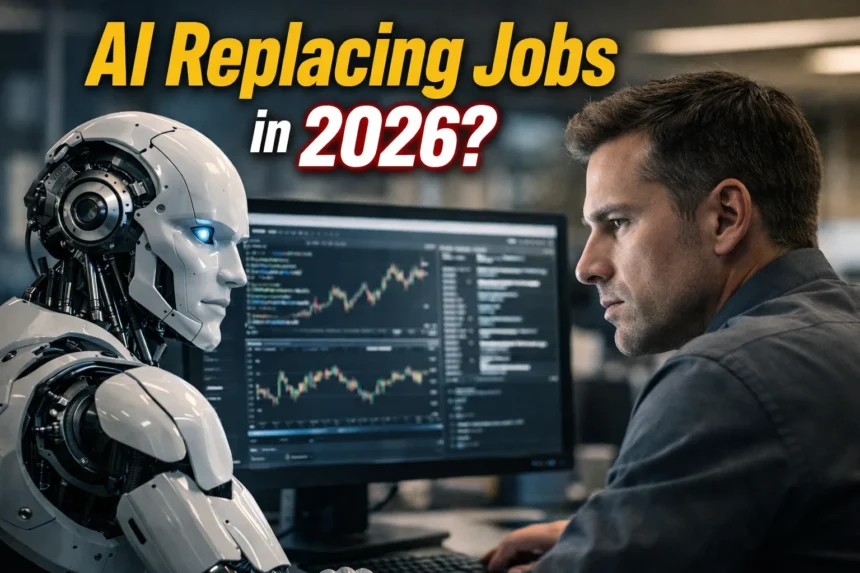
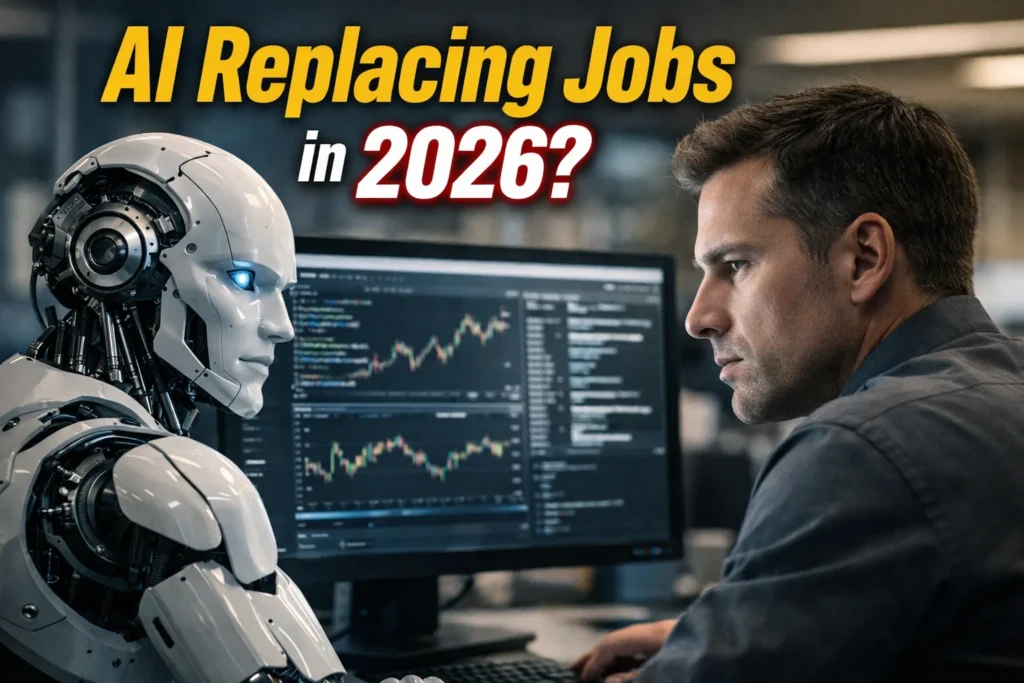
Artificial intelligence has moved beyond experiments and buzzwords. In 2026, AI tools are actively performing tasks that once required human effort, skill, and judgment. From writing content and analyzing data to customer support and design, AI-driven automation is changing how work gets done across industries. This shift has sparked fear, curiosity, and debate about whether machines will replace human jobs entirely. The truth is more complex than headlines suggest. While AI tools are indeed replacing certain tasks and roles, they are also reshaping jobs and creating new opportunities. Understanding which jobs are most affected and why is essential for workers who want to stay relevant in the changing job market.
Why AI Tools Have Become So Powerful in 2026
AI tools in 2026 are faster, cheaper, and more accessible than ever before. Advances in machine learning, natural language processing, and computer vision have enabled AI systems to perform complex tasks with remarkable accuracy. Cloud-based platforms allow businesses of all sizes to deploy AI without heavy infrastructure investment. Another key factor is integration. AI is now embedded directly into everyday software used by companies, making automation seamless and scalable. This widespread adoption is what makes AI a serious disruptor of traditional job roles.
Also read this : Most Dangerous Mobile Apps in 2026 That Can Secretly Steal Your Data
Content Creation and Writing Jobs Under Pressure
One of the most visible impacts of AI is in content creation. AI tools can now generate articles, marketing copy, emails, and social media posts within seconds. These tools analyze data, tone, and user intent to produce content that often meets basic professional standards. While creative storytelling and deep analysis still require human insight, routine writing tasks are increasingly automated. Entry-level writing roles and repetitive content jobs face the highest risk, forcing professionals to upgrade skills and focus on strategy and originality.
Customer Support and Call Center Automation
Customer support is another area experiencing rapid AI-driven change. AI chatbots and voice assistants can handle large volumes of customer queries around the clock. They provide instant responses, reduce wait times, and lower operational costs for businesses. In 2026, many companies use AI to manage first-level support, leaving complex issues for human agents. This reduces the number of entry-level support roles but increases demand for skilled professionals who can handle escalation, relationship management, and system oversight.
Data Analysis and Office Administration Roles
AI tools now excel at processing large datasets, generating reports, and identifying patterns faster than humans. Routine data entry, basic analysis, and administrative reporting tasks are increasingly automated. Office administration roles that rely heavily on repetitive tasks are being redefined. However, decision-making, interpretation, and strategic planning still depend on human judgment, making hybrid roles more common.
Design, Editing, and Creative Automation
Graphic design, video editing, and image generation have seen a surge in AI-powered tools. These tools can quickly produce logos, thumbnails, and basic designs based on templates and prompts. While AI accelerates production, it struggles with originality, cultural context, and emotional nuance. Designers who rely solely on basic execution are at risk, whereas those who combine creativity with strategic thinking remain valuable.
Impact on Software Development and IT Jobs
AI-assisted coding tools have transformed software development. They can write code snippets, detect bugs, and suggest improvements. This increases productivity but also reduces the need for large teams handling routine coding tasks. Developers in 2026 are expected to focus more on architecture, problem-solving, and system design. Those who understand AI tools and collaborate with them gain a significant advantage.
Jobs Most at Risk Versus Jobs That Are Safer
Jobs involving repetitive, rule-based tasks face the highest risk of automation. Roles that require empathy, creativity, leadership, and complex decision-making are more resilient. Healthcare, education, management, and skilled trades still rely heavily on human interaction and judgment. AI supports these fields but does not replace human professionals entirely.
What Global Experts Say About AI and Employment
Global organizations such as the World Economic Forum consistently emphasize that AI will transform jobs rather than eliminate work altogether. The focus is shifting toward reskilling and upskilling the workforce to adapt to technological change. Official insights and reports can be explored at https://www.weforum.org.
How Workers Can Future-Proof Their Careers
The most effective way to survive and thrive in an AI-driven job market is adaptability. Learning how to work with AI tools, improving problem-solving skills, and focusing on uniquely human strengths are essential. Continuous learning, digital literacy, and emotional intelligence are becoming as important as technical expertise. Workers who see AI as a partner rather than a threat are better positioned for long-term success.
Also read this : Dangerous Mobile Phone Overuse Effects in 2026: How It Is Silently Damaging Your Eyes, Brain & Sleep
The Reality Check: AI Is a Tool, Not a Total Replacement
Despite the fear surrounding AI, it is important to remember that AI tools operate based on data and instructions created by humans. They lack true understanding, ethics, and accountability. Businesses still need human oversight to ensure quality, fairness, and responsibility. In many cases, AI increases efficiency rather than replacing entire roles. The challenge lies in managing the transition responsibly.
Adaptation Is the Only Safe Strategy
In 2026, AI tools are undeniably reshaping the job market. Some roles are disappearing, many are changing, and new ones are emerging. The real risk is not AI itself, but resistance to change. Workers who continuously update their skills and embrace technology will find opportunities even in an automated world. AI may replace tasks, but human creativity, judgment, and adaptability remain irreplaceable.