If an App Is Free, You Are the Product
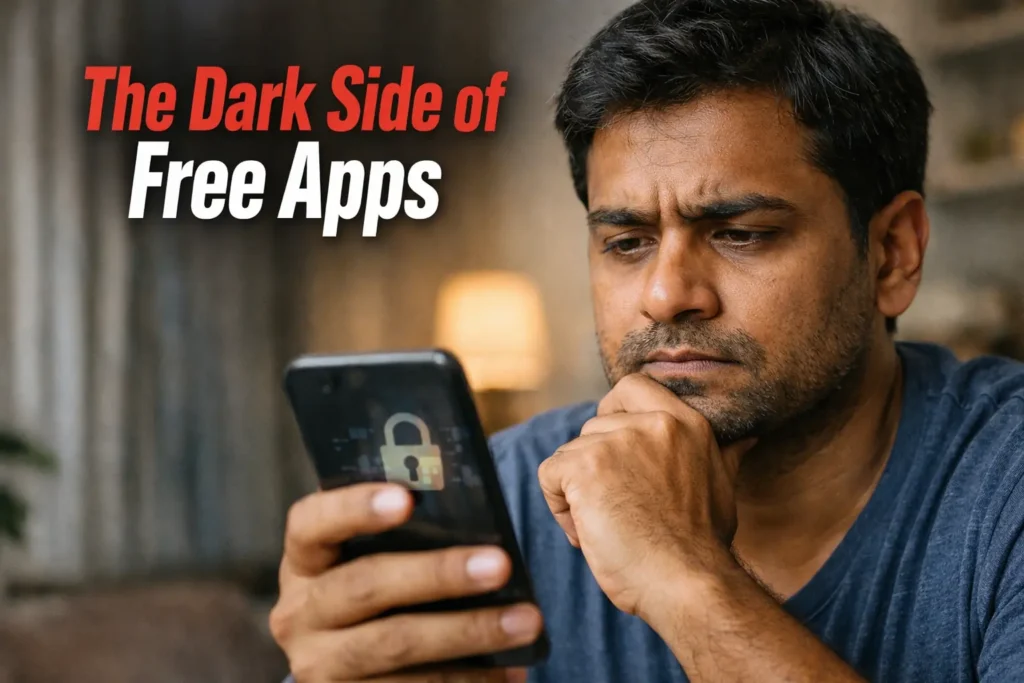
Free mobile apps have become an inseparable part of daily life. From social media and photo editing to shopping, gaming, and finance, almost every digital need is met by an app that costs nothing to download. This convenience feels like a win for users, especially in a price-sensitive country like India. However, in 2026, a growing truth is becoming hard to ignore. Free apps are not free. Instead of money, users pay with something far more valuable—their personal data. Most people never realize how much information they give away or how it is used behind the scenes.
What Does “Free Apps” Really Mean?
When developers offer apps without charging users, they still need revenue to survive and grow. That revenue rarely comes from goodwill. It comes from data collection, targeted advertising, and data sharing. Every tap, search, location update, and interaction inside an app creates data. That data has immense commercial value, and in many cases, it becomes the real product.
What Kind of Data Free Apps Collect
Most users assume apps only collect basic information. In reality, free apps often collect far more than expected. This includes location history, device information, browsing behavior, app usage patterns, contact lists, and sometimes even microphone or camera access. While some of this data improves app performance, much of it exists solely to build detailed user profiles for advertising and analytics purposes.
Also read this : Most Dangerous Mobile Apps in 2026 That Can Secretly Steal Your Data
How Your Data Is Monetized
Once collected, data is processed, analyzed, and categorized. Advertisers use this information to target users based on behavior, preferences, income level, and even emotional patterns. In some cases, anonymized data is shared with third parties. In others, data is combined across platforms to create deeply personalized digital profiles. Users rarely know who ultimately accesses this information.
Why This Problem Is Worse in 2026
In 2026, artificial intelligence and advanced analytics have made data more powerful than ever. Predictive algorithms can now anticipate behavior, influence decisions, and shape consumer habits with alarming accuracy. This means that data collected by free apps today can impact financial decisions, political opinions, and lifestyle choices tomorrow.
Permissions: The Click You Never Thought About
Most people install apps quickly, clicking “Allow” without reading permission requests. Over time, apps gain access to features that are unnecessary for their core function. A simple flashlight app does not need location access. A photo editor does not need contacts. Yet permissions are often granted automatically, opening doors to excessive data collection.
How Free Apps Impact Middle-Class Indians
Middle-class users rely heavily on free apps to save money. Ironically, this dependency increases exposure to privacy risks. Data-driven ads influence spending habits, promote unnecessary purchases, and reinforce consumer debt. What looks like convenience slowly shapes financial behavior without conscious awareness.
Is Data Selling Legal in India?
Data collection and usage exist in a legal gray area. While India has taken steps toward data protection, enforcement remains uneven. Government bodies like the Ministry of Electronics and Information Technology have introduced guidelines and digital privacy initiatives, but user awareness is still limited. Regulations protect users only when users understand their rights.
The Psychological Cost of Data Exploitation
Beyond privacy, constant tracking creates psychological pressure. Personalized content keeps users engaged longer, reduces attention spans, and increases dependency. Apps are designed not just to serve, but to retain and influence. Over time, users lose control over how they consume information.
Why Most Users Ignore the Risk
The biggest reason is invisibility. Data misuse does not cause immediate damage. There is no instant loss like money theft. The impact is slow, subtle, and delayed. This makes it easy to ignore warnings, dismiss privacy concerns, and prioritize convenience over caution.
How to Protect Yourself Without Quitting Technology
Avoiding technology entirely is unrealistic. However, awareness makes a difference. Reviewing app permissions, uninstalling unused apps, and choosing privacy-focused alternatives can reduce risk. Understanding how apps earn money helps users make informed decisions instead of blind choices. For more information visit Ministry of electronics and information technology.
Why Digital Awareness Is a Survival Skill in 2026
Data is the new currency. Those who protect it retain control. Those who ignore it become predictable, targetable, and vulnerable. Digital literacy today is as important as financial literacy. Both determine long-term freedom.
Free Apps Cost More Than You Think
In 2026, the real price of free apps is not visible on the screen. It is stored in servers, sold to advertisers, and used to influence behavior. Convenience should never come at the cost of awareness. The goal is not fear, but understanding. When users know how free apps operate, they regain control over their data, choices, and digital lives.