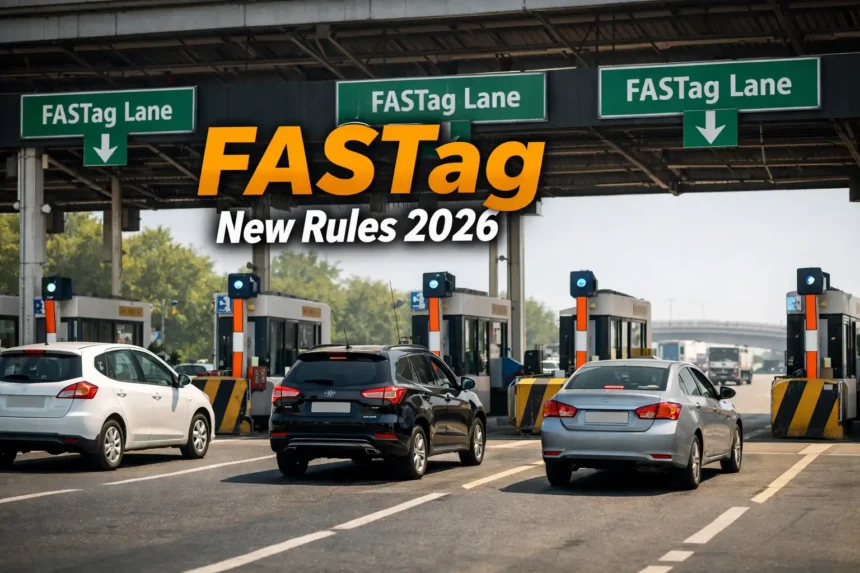

FASTag has become an essential part of road travel in India. What started as a cashless toll payment system has now evolved into a strictly monitored digital compliance mechanism. In 2026, several new FASTag rules have come into force to improve transparency, reduce congestion at toll plazas, and prevent misuse. Many vehicle owners still assume FASTag works the same way as before, but ignorance of the updated rules can result in penalties, double toll charges, or even blacklisting. This blog explains FASTagnew rules 2026 in a simple and practical way so that every driver can stay compliant and avoid unnecessary trouble.
Why FASTag Rules Were Updated in 2026
The main objective behind updating FASTag rules is to strengthen digital toll collection and eliminate manual intervention. With the rapid increase in vehicle numbers, toll plazas were facing issues such as lane misuse, delayed payments, and disputes over charges. The 2026 updates introduce stricter automated checks using RFID scanners and high-resolution cameras, ensuring that every vehicle crossing a toll plaza follows uniform rules.
FASTag Low Balance Rule Explained
One of the most important changes in FASTag rules 2026 is the strict enforcement of wallet balance. Earlier, vehicles were sometimes allowed to pass even if the balance was low, leading to delayed settlements. Now, if your FASTag balance is insufficient at the time of crossing, the system may automatically charge a penalty or double toll fee. In repeated cases, the FASTag can be temporarily blocked. Vehicle owners are advised to maintain adequate balance and enable auto-recharge to avoid last-minute issues.
FASTag Penalty Rules at Toll Plazas
FASTag penalty rules have become more stringent in 2026. If a vehicle enters a FASTag-only lane with an inactive or blacklisted tag, the driver may be required to pay twice the applicable toll amount. In some cases, repeated violations are recorded digitally and can lead to further restrictions. These penalties are designed to discourage lane jumping and ensure smoother traffic flow at toll plazas.
FASTag Blacklisting: What Triggers It
FASTag blacklisting is no longer limited to technical errors. In 2026, tags can be blacklisted due to incorrect vehicle number mapping, misuse of private FASTag on commercial vehicles, repeated low balance violations, or incomplete KYC details. Once blacklisted, the FASTag will not be accepted at toll plazas, forcing the driver to pay cash or face penalties. Updating KYC and vehicle information on time is now more important than ever.
Toll Plaza Entry–Exit Monitoring System
A new entry–exit monitoring mechanism has been introduced on select highways. This system tracks the time taken by a vehicle between toll entry and exit points. If the system detects abnormal travel time that does not match the distance, it may flag the transaction for review. This rule helps prevent toll evasion and ensures fair charging for all highway users.
How to Stay Safe from FASTag Issues
To avoid FASTag-related problems, vehicle owners should regularly check their FASTag status through their issuing bank or app. Ensuring sufficient balance, keeping KYC updated, and using the correct lane at toll plazas can save time and money. Official updates and guidelines are issued by the National Highways Authority of India, which remains the most reliable source for FASTag-related information.
Future of FASTag in India
FASTag is expected to integrate further with advanced vehicle tracking and digital payment systems in the coming years. The 2026 rules are a step toward fully automated toll collection, reduced congestion, and better highway management. As the system becomes stricter, compliance will be the key to hassle-free travel. For more information visit National Highways Authority of India (NHAI).
FASTag new rules 2026 clearly show that digital toll collection in India is entering a more disciplined phase. While the rules may appear strict, they are designed to benefit genuine users by reducing delays and improving transparency. By maintaining sufficient balance, keeping documents updated, and following toll lane discipline, vehicle owners can avoid penalties and enjoy smoother highway journeys throughout 2026 and beyond.
Also read this : Indian Railways Seat Sharing Rules 2026: RAC, Waiting List and Confirmation