Free Internet and Charging Feel Helpful, Until They Aren’t
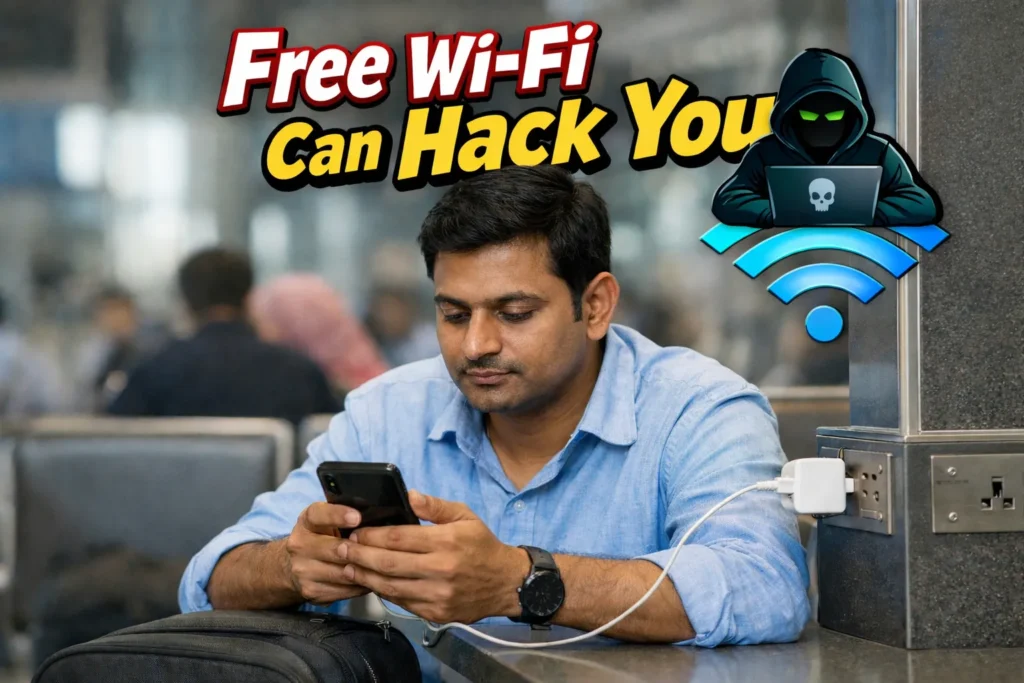
Free Wi-Fi and public charging stations have become part of everyday life in India. Airports, railway stations, malls, cafes, hospitals, and even government offices offer these facilities. When your mobile data is slow or your battery is dying, these options feel like a lifesaver. However, in 2026, cybersecurity experts are warning that free Wi-Fi and public charging points are among the most common tools used to hack smartphones. The danger is not obvious, and that is what makes it serious. Most people never realize their phone was compromised until personal data is stolen or financial loss occurs.
Why Free Wi-Fi Is Risky in 2026
Free Wi-Fi networks are often unsecured or poorly protected. Unlike home or office networks, public Wi-Fi does not always encrypt data properly. This makes it easier for attackers to intercept information. In many cases, hackers create fake Wi-Fi networks with names similar to legitimate ones, such as “Airport_Free_WiFi” or “Cafe_Guest”. When users connect, they unknowingly allow attackers to monitor their online activity. Passwords, emails, browsing history, and even banking data can be exposed without any warning signs.
Man-in-the-Middle Attacks Explained Simply
One of the most common threats on public Wi-Fi is a man-in-the-middle attack. This happens when a hacker secretly places themselves between your phone and the internet connection. You think you are communicating directly with websites or apps, but all data passes through the attacker first. This allows them to read, record, or manipulate information in real time. The scary part is that your phone continues to work normally, so you don’t suspect anything unusual.
What Is Juice Jacking Through Public Charging Stations
Public charging stations come with a different kind of risk known as juice jacking. These charging ports can be modified to transfer data along with power. When you plug your phone into a compromised charging station, malware can be installed silently. This malware may steal data, track activity, or give attackers remote access to your device. Unlike Wi-Fi attacks, juice jacking requires no clicks or permissions. Simply charging your phone is enough.
Also read this : WhatsApp Privacy Update 2026: What Really Changed and How It Affects Indian Users
What Hackers Can Steal From Your Phone
Once a phone is compromised, attackers may gain access to contacts, photos, emails, saved passwords, and social media accounts. Some malware targets banking apps, OTP messages, and payment platforms. In many cases, stolen data is sold online rather than used immediately. Victims may face identity theft or fraud weeks or months later, making it difficult to trace the source.
Why Indian Users Are More Vulnerable
India has one of the largest smartphone user bases in the world. Public infrastructure is heavily used, and digital awareness is still growing Students, daily commuters, travelers, and gig workers rely heavily on free Wi-Fi and public charging. This high usage creates a large pool of easy targets for cybercriminals. Limited awareness about mobile security further increases the risk.
Signs Your Phone May Be Compromised
Phones hacked through public networks may show subtle signs. These include sudden battery drain, overheating, unknown apps, unusual data usage, or random pop-upsMany users ignore these signs, assuming they are normal phone issues. This delay allows attackers to continue accessing data unnoticed.
Government Cybersecurity Warnings
India’s official cybersecurity agency, Indian Computer Emergency Response Team, has repeatedly warned users about public Wi-Fi risks and unsafe charging practices. Advisories recommend avoiding unknown networks and using personal chargers whenever possible. These warnings exist, but awareness among everyday users remains limited.
How to Protect Yourself Without Fear
Avoiding technology is unrealistic, but smart usage reduces risk. Using mobile data instead of public Wi-Fi for sensitive tasks is safer. Carrying your own charger and power bank eliminates juice jacking risksKeeping phone software updated and avoiding unknown networks adds another layer of protection. Awareness is more powerful than fear.
Why This Issue Matters in 2026
As digital payments, online work, and personal communication increase, smartphones carry more sensitive data than ever beforeA single careless connection can compromise years of personal information. Cybercrime no longer targets only large companies—it targets individuals.
Convenience Should Never Replace Caution
Free Wi-Fi and public charging stations are not evil, but they are not harmless either. In 2026, digital safety depends on understanding hidden risks. Protecting your phone is protecting your identity, money, and privacy. The safest habit is simple: if it’s free and public, think twice before trusting it.