A pple is finally preparing to enter the foldable smartphone market, a segment it has carefully observed for years without making a move. While brands like Samsung, Motorola, Google, and Huawei have already released multiple generations of foldable phones, Apple has remained noticeably absent. That silence, however, may soon come to an end. Industry analysts and supply chain reports suggest that Apple’s first foldable device, commonly referred to as the iPhone Fold, could debut as early as late 2026.
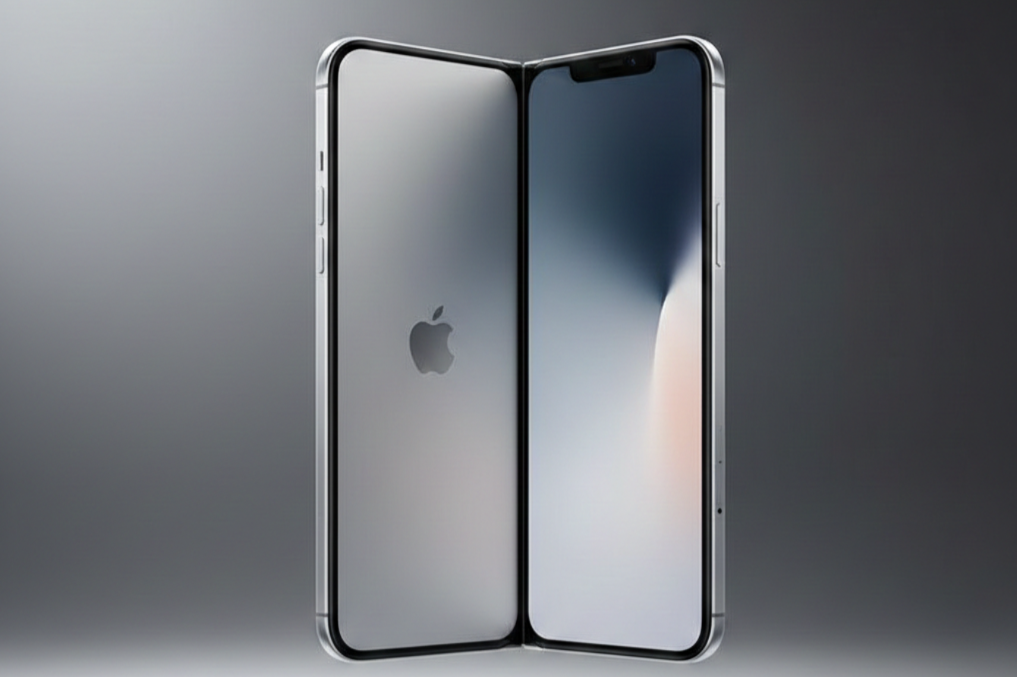
iPhone Fold
For a company known for entering markets late but refining products to near perfection, Apple’s cautious approach toward foldables is hardly surprising. Foldable smartphones have historically faced issues such as fragile displays, visible creases, bulky designs, and compromised battery life. Apple appears to have waited deliberately, choosing to refine the technology internally rather than rushing a product to market.
Unlike Android manufacturers that experiment publicly, Apple typically launches products only when it believes they meet its standards for durability, usability, and long-term reliability. Reports suggest that Apple has been testing foldable prototypes for several years, holding back until it could address the shortcomings seen in existing foldable phones.
From a market perspective, Apple’s entry into foldables is unlikely to make the category affordable overnight. Foldable smartphones remain expensive and niche, and an Apple-made foldable will almost certainly sit at the higher end of the pricing spectrum. Still, competition from Apple could force the industry to improve design quality, software optimisation, and long-term durability across all brands.
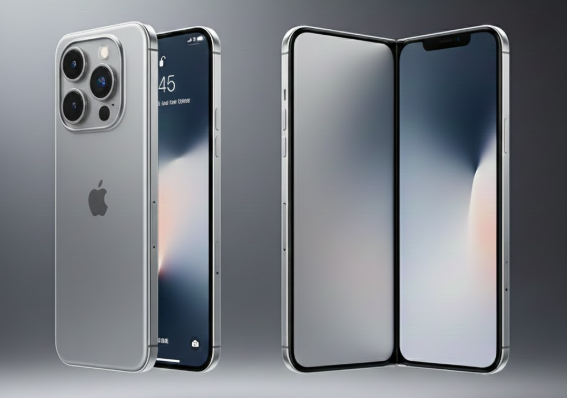
The iPhone Fold is widely expected to adopt a book-style foldable design, similar to Samsung’s Galaxy Z Fold lineup. This form factor includes a smaller outer display for everyday tasks and a larger inner display that unfolds like a book for productivity, media consumption, and multitasking. While companies like Huawei and Samsung have begun experimenting with tri-fold designs, Apple is unlikely to adopt such an approach in its first attempt.
According to respected Apple analyst Ming-Chi Kuo, the iPhone Fold could feature a 5.5-inch outer display paired with a 7.8-inch inner screen. When folded, the device is expected to measure between 9 and 9.5 millimetres in thickness, shrinking to around 4.5 to 4.8 millimetres when unfolded. These dimensions would place Apple’s foldable in direct competition with the Galaxy Z Fold series, which currently leads the market in thinness.
Achieving a slim profile will be critical for Apple. Samsung’s latest Galaxy Z Fold models are impressively thin and lightweight, setting a high benchmark for competitors. Apple has already demonstrated its ability to engineer ultra-thin devices with products like the iPhone Air, and it is widely believed that the design lessons learned there will influence the iPhone Fold’s construction.
Durability remains one of the biggest challenges for foldable smartphones, and this is where Apple may truly differentiate itself. Traditional foldables are more fragile than slab phones, often sacrificing water resistance and structural rigidity. Google has made progress in this area with the Pixel Fold series, particularly with improved hinge mechanisms and higher IP ratings.
Apple’s reputation for hardware durability suggests that it will not compromise here. Reports indicate that the company is working toward a crease-free or near-invisible foldable display, potentially in collaboration with Corning. This may involve a bendable version of Apple’s Ceramic Shield glass, engineered to withstand repeated folding without developing visible wear.
If Apple succeeds in delivering a foldable display with minimal creasing and strong scratch resistance, it could significantly raise consumer expectations across the entire category. Display quality has long been a weak point for foldables, and Apple is unlikely to accept visible imperfections as a trade-off for innovation.
Another area where Apple could outshine existing foldables is camera performance. Despite their premium pricing, most foldable phones still fall short of flagship slab phones when it comes to camera quality. Even the Galaxy Z Fold and Pixel Fold series compromise on sensors, optics, or image processing due to space constraints.
Apple, however, is known for prioritising camera consistency across its premium devices. If the iPhone Fold launches with cameras on par with the iPhone Pro series, it would immediately set a new standard for foldable photography. A foldable iPhone with uncompromised cameras could appeal strongly to content creators and professionals who currently see foldables as secondary devices.
Performance will almost certainly not be an issue. Apple is expected to power the iPhone Fold with its most advanced A-series chipset available at launch, paired with ample RAM to handle multitasking across multiple displays. Foldables demand more from processors due to their larger screens and split-screen workflows, and Apple’s silicon advantage could play a major role here.
Also Read This : Xiaomi 17 Ultra Leica Edition: DSLR-Style Rotary Zoom Ring, Snapdragon 8 Elite Gen 5
Battery life, however, may be a more complex challenge. Foldable devices require large batteries, but thin designs limit internal space. Analysts suggest Apple may use the same high-density battery technology found in the iPhone Air, prioritising energy efficiency over sheer capacity. This approach could deliver respectable battery life without compromising thickness.
There is also speculation that Apple may forgo Face ID on the iPhone Fold due to internal space limitations. Instead, the device could rely on Touch ID integrated into the side power button, similar to what many Android foldables already use. While this would mark a shift for Apple’s flagship phones, it may be a practical compromise.
Software could be Apple’s strongest advantage. One of the most common criticisms of foldable phones today is their user interface, which often feels like a stretched version of a standard smartphone experience. Apple has a long history of redefining user interfaces, from the original iPhone to the iPad and Mac.
The iPhone Fold could introduce a custom foldable-optimised interface that blends the best elements of iOS and iPadOS. Features such as intelligent multitasking, adaptive layouts, and seamless app scaling could make the foldable experience feel genuinely premium rather than experimental. If Apple gets the software right, it could redefine how foldable phones are used on a daily basis.
Pricing remains the biggest unknown. Industry insiders expect the iPhone Fold to cost well above $2,000, with some estimates placing it closer to $2,400. This would make it more expensive than competing foldables from Samsung and Google. Apple will need to carefully position the device to justify such a price, especially after mixed reactions to products like the Vision Pro.
Ultimately, the success of the iPhone Fold will depend on whether Apple can deliver a foldable that feels purposeful rather than novelty-driven. If Apple manages to combine durability, camera quality, software innovation, and premium design into a single device, the iPhone Fold could reshape the foldable market. If not, it risks becoming an expensive experiment in an already niche category.
As anticipation builds toward a possible 2026 launch, one thing is clear: Apple’s first foldable iPhone will be one of the most closely watched smartphone releases of the decade.