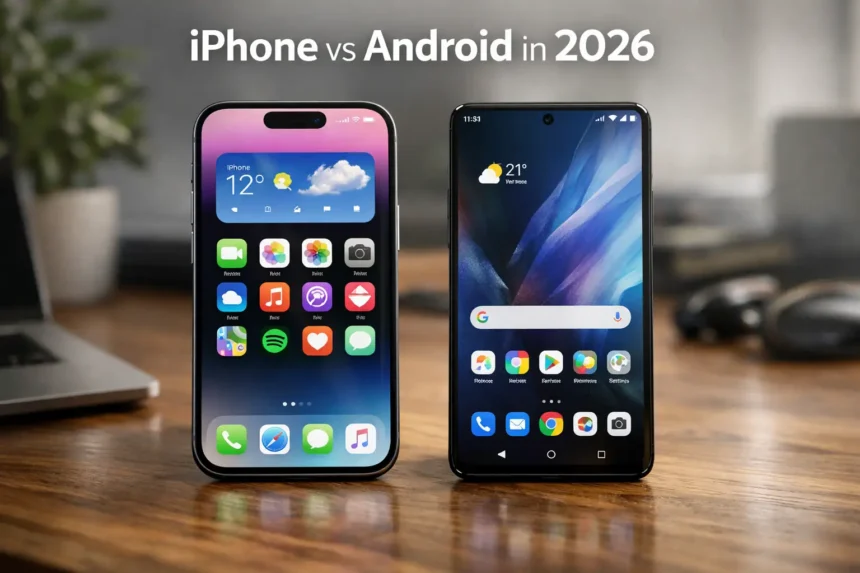
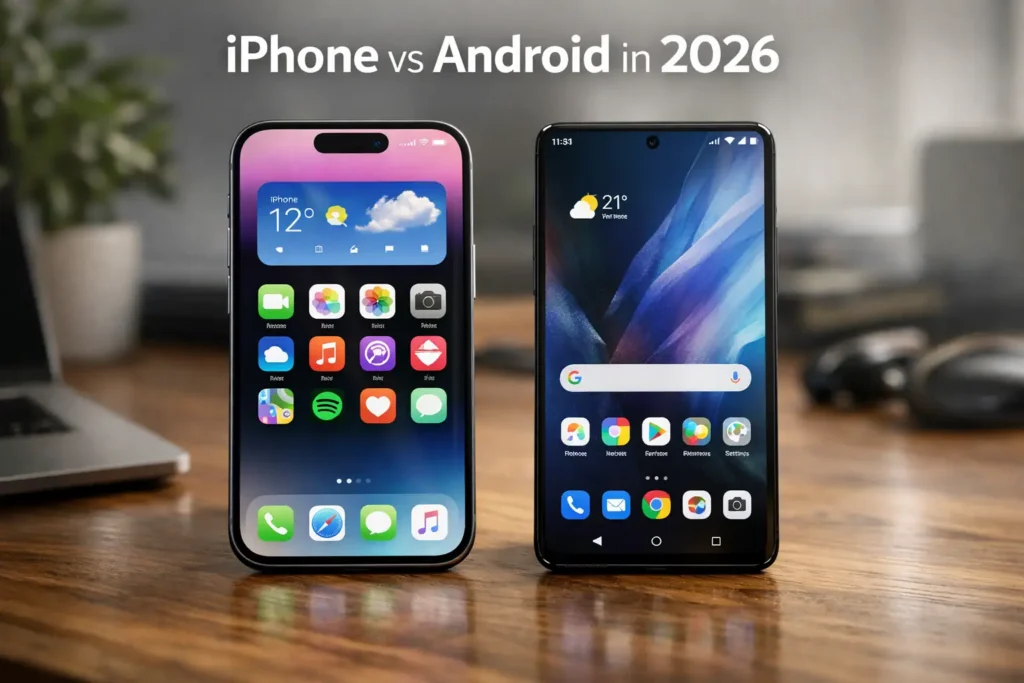
T he debate between iPhone vs Android has existed for over a decade, and even in 2026, it remains one of the most searched and discussed technology topics in India. With smartphones becoming an essential part of daily life, choosing the right platform affects everything—from productivity and photography to security and long-term value
Indian users today have more options than ever before. On one side are Apple’s premium iPhones known for stability and ecosystem integration, and on the other side are Android smartphones offering flexibility, variety, and affordability. This blog explores the iPhone vs Android comparison in 2026, focusing on what truly matters for Indian users.
Understanding the Smartphone Market in 2026
By 2026, the Indian smartphone market has matured significantly. Budget Android phones now offer features that were once exclusive to flagship devices, while iPhones have improved efficiency, battery optimization, and camera intelligence.
5G connectivity is now standard on both platforms, and the focus has shifted toward software reliability, long-term updates, and user experience. For Indian buyers, value for money and durability play a major role in decision-making.
Also read this :Best 5G Smartphones Under ₹20,000 in January 2026: Top 5 Phones
Performance and Daily Usage Experience
When it comes to performance, iPhones powered by Apple’s custom processors continue to deliver smooth and consistent results. Apps open quickly, animations feel fluid, and performance remains stable even after years of use. This makes iPhones especially appealing to users who value long-term reliability.
Android phones, however, have closed the performance gap significantly in 2026. Mid-range and premium Android devices now handle multitasking, gaming, and heavy applications effortlessly. The key difference lies in variety—Android users can choose performance levels based on their budget, while iPhones follow a premium-only approach.
Camera Quality and Photography in 2026
Camera performance is one of the most important factors for Indian users. In 2026, iPhones continue to deliver natural colors, strong video recording, and consistent results across lighting conditions. Their strength lies in video quality, portrait accuracy, and social media optimization.
Android phones, on the other hand, offer more experimental and feature-rich camera setups. Many Android devices now provide high-resolution sensors, AI-enhanced night photography, and advanced zoom capabilities at different price points. For photography enthusiasts who enjoy customization and versatility, Android often feels more exciting.
Battery Life and Charging Speed
Battery expectations have increased significantly among Indian users, and both platforms have adapted. iPhones focus on software optimization, allowing smaller batteries to last through a full day of usage. Charging speeds have improved but remain conservative to protect battery health.
Android smartphones generally offer larger batteries and much faster charging solutions. For users who prioritize quick top-ups and extended screen time, Android devices often feel more practical, especially in the mid-range segment.
Software Experience and Updates
One of the biggest advantages of iPhones is long-term software support. Apple provides regular updates for many years, ensuring security and feature consistency. This is particularly useful for users who prefer keeping the same phone for a long time.
Android has improved significantly in this area. Many manufacturers now promise multiple years of updates, especially in premium models. However, the experience can vary depending on the brand. Android’s strength lies in customization, allowing users to personalize their phones extensively.
Also read this : Best Flagship Phones of 2025: Samsung Galaxy S25 Ultra, iPhone 17 Pro Max, Vivo X300 Pro, and More
Price and Value for Money in India
Price remains a decisive factor for Indian consumers. iPhones are positioned in the premium segment, making them expensive upfront. However, their resale value remains strong, which offsets long-term costs for some buyers.
Android phones dominate the budget and mid-range segments. From ₹10,000 to premium prices, Android offers choices for every type of user. This flexibility makes Android the preferred option for students, first-time buyers, and users who want maximum features at a lower price.
Ecosystem and Device Compatibility
iPhones work best within Apple’s ecosystem, seamlessly connecting with other Apple devices for productivity and convenience. This experience is polished but works best when users are fully invested in the ecosystem.
Android integrates easily with a wide range of devices and services. It works well with different brands, accessories, and operating systems, offering greater freedom and compatibility for Indian users.
iPhone vs Android: Which Is Better for Indian Users?
There is no single correct answer to the iPhone vs Android debate in 2026. The choice depends on user priorities. iPhones are ideal for those who want stability, long-term updates, and a premium experience. Android phones are better for users who value affordability, customization, faster charging, and wider device options.
Understanding your usage pattern, budget, and expectations is more important than brand loyalty.
Trusted Source for iPhone vs Android Comparisons
For detailed specifications, benchmarks, and comparisons between iPhones and Android devices, readers can rely on trusted platforms like GSMArena:
In 2026, both iPhone and Android have reached a level where neither is objectively better in all aspects. iPhones offer unmatched consistency and longevity, while Android phones deliver flexibility, variety, and value.
For Indian users, the best smartphone is the one that fits their lifestyle, budget, and daily needs. Whether you choose iPhone or Android, today’s technology ensures a powerful and satisfying smartphone experience on both sides.