The Silent Middle-Class Money Crisis in 2026
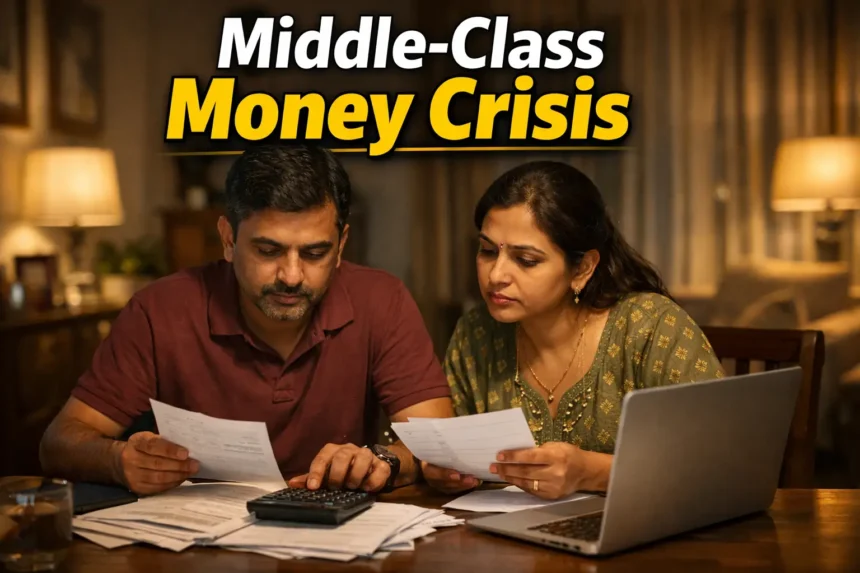
The middle-class money crisis in 2026 is real, but very few people are openly talking about it. On social media, life looks comfortable and stable. But behind the scenes, many Indian families are struggling with rising expenses, increasing EMIs, job insecurity, and financial pressure. The cost of living in India in 2026 has increased significantly. School fees, medical bills, fuel costs, rent, groceries, and utility bills are all rising faster than salaries. For salaried individuals, income growth is slow, but expenses are moving at high speed.
This blog explores the hard financial realities middle-class families are facing and practical survival strategies that can help manage financial stress in 2026.
Rising Expenses India 2026: The Real Pressure Point
Inflation is not just a headline term; it directly affects kitchen budgets. Grocery prices have increased, cooking gas is expensive, and electricity bills are higher due to lifestyle upgrades and increased usage. Medical expenses are another major concern. Even with health insurance, out-of-pocket expenses during emergencies can disturb financial planning. Education costs, especially private school and coaching fees, continue to rise every year. The middle-class money crisis in 2026 is largely driven by this imbalance between stable income and rising daily expenses.
EMI Burden: Loans Are Becoming a Long-Term Trap
Home loans, car loans, personal loans, and credit card EMIs have become a normal part of middle-class life. While loans help fulfill dreams early, they also create long-term pressure. Many families are spending 40–60% of their monthly income on EMIs. If an unexpected event like job loss or medical emergency occurs, repayment becomes stressful. The EMI burden on the middle class is one of the biggest financial risks in 2026. Easy credit availability has made borrowing simple, but repayment discipline is becoming harder.
Job Pressure and Income Uncertainty
The employment market is evolving rapidly. Automation, AI adoption, and corporate restructuring are creating uncertainty in many industries. While jobs are available, job security feels weaker than before. Many salaried employees fear layoffs or stagnant salary growth. At the same time, workload expectations are increasing. This combination of income uncertainty and rising responsibilities is adding emotional stress. The middle-class money crisis in 2026 is not only financial but also psychological.
Lifestyle Inflation: The Hidden Enemy
Social comparison has become stronger due to social media. Seeing others upgrade cars, travel internationally, or buy luxury gadgets creates pressure to match lifestyles. Many families upgrade their lifestyle before strengthening their financial foundation. Premium smartphones, frequent dining out, expensive weddings, and luxury purchases add unnecessary strain. Lifestyle inflation silently weakens savings capacity. Even small recurring expenses, when combined, reduce long-term wealth-building potential.
Emergency Fund: The Missing Safety Net
One of the most common financial gaps in Indian middle-class families is the absence of a proper emergency fund. Ideally, families should maintain savings equal to at least six months of expenses. However, many households operate month-to-month. Without a safety cushion, any unexpected event—medical emergency, job loss, or major repair—creates a financial shock. In 2026, financial stability depends more on preparedness than on income alone.
Also read this : How Middle-Class Indians Are Using AI to Earn ₹50,000/Month in 2026
Smart Middle-Class Survival Strategies in 2026
Focus on Budget Discipline
Tracking expenses carefully is the first step toward control. Identifying unnecessary subscriptions, luxury spending, and avoidable EMIs can create breathing space in monthly budgets.
Reduce High-Interest Debt
Credit card debt and personal loans carry high interest rates. Prioritizing repayment of these loans reduces long-term stress and improves cash flow.
Build Multiple Income Sources
Relying on a single salary is risky in 2026. Many middle-class individuals are exploring side hustles, freelancing, or small online businesses. Even an additional ₹10,000–₹20,000 per month can improve stability.
Increase Financial Literacy
Understanding investment options, tax planning, and insurance coverage can significantly improve financial health. Reliable financial education resources are available through official platforms like the Reserve Bank of India at .Financial awareness empowers better decision-making.
Emotional Strength Matters Too
Money problems often create tension within families. Open communication about financial goals, budgeting, and savings reduces conflict. Planning together builds confidence. Instead of comparing lifestyles, focusing on long-term security provides peace of mind. True financial success is stability, not display.
Facing the Middle-Class Money Crisis with Strategy
The middle-class money crisis in 2026 is not about poverty; it is about pressure. Rising expenses, EMI burden, job uncertainty, and lifestyle inflation are testing financial discipline. However, the situation is manageable with awareness and smart planning. Budget control, emergency funds, debt reduction, and additional income sources can transform financial stress into stability. Middle-class families have always adapted to changing times. With careful planning and responsible decisions, 2026 can become a year of financial reset instead of financial crisis.