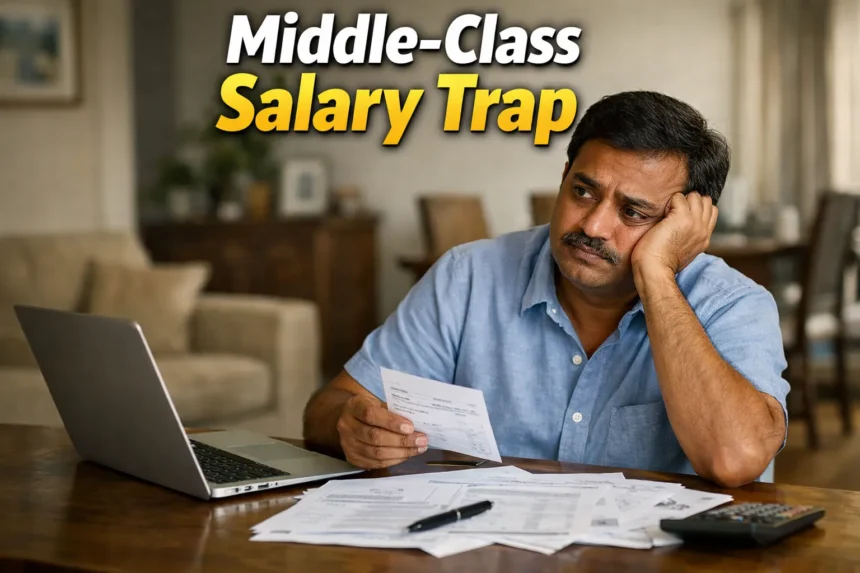
In 2026, most middle-class Indians face a confusing reality. Salaries have increased compared to previous years, job titles look better, and lifestyles appear upgraded on the surface. Yet, despite earning more than before, families feel more stressed, financially stretched, and insecure. This contradiction is known as the middle-class salary trap. It is a situation where income rises slowly, but expenses, responsibilities, and expectations rise much faster. Understanding this trap is crucial because ignoring it leads to burnout, debt, and long-term financial instability.
What Exactly Is the Middle-Class Salary Trap?
The salary trap occurs when increased income does not translate into improved quality of life. Every salary hike is quickly absorbed by higher rent, EMIs, school fees, fuel costs, insurance, and daily living expenses. Middle-class families often feel they are running faster just to stay in the same place. Savings do not grow, free time shrinks, and financial anxiety becomes constant.
Inflation Eats Salary Silently
Inflation is the biggest invisible enemy of middle-class income. Prices of essentials rise steadily every year, but salary increments rarely match real inflation. Groceries, electricity, healthcare, and education cost significantly more in 2026 than they did a few years ago. Even when salaries increase by a few percent, purchasing power often decreases.
Also read this : Why Middle-Class Life Is Getting Harder in 2026: The Uncomfortable Truth Nobody Talks About
Lifestyle Inflation After Every Salary Hike
A major contributor to the salary trap is lifestyle inflation. With each raise, expenses also increase. A better phone, upgraded house, newer vehicle, or more subscriptions slowly become “necessary.” Social media and peer pressure amplify this behavior. People feel compelled to match lifestyles around them, often without realizing the long-term financial impact.
EMIs and Long-Term Commitments
EMIs are the backbone of the middle-class salary trap. Home loans, car loans, education loans, and credit card EMIs lock future income in advance. While EMIs create comfort today, they reduce flexibility tomorrow. Job changes, emergencies, or income disruptions become stressful when large portions of salary are pre-committed.
Education and Child-Related Expenses
Parents invest heavily in children’s education, hoping to secure a better future. School fees, coaching classes, online courses, and competitive exam preparation consume a major share of income. These expenses are emotionally driven and difficult to reduce, making them one of the strongest contributors to financial pressure.
Healthcare Costs: The Silent Budget Killer
Healthcare expenses hit suddenly and unpredictably. Even with insurance, deductibles, medicines, and uncovered treatments drain savings quickly. Middle-class families often rebuild emergency funds repeatedly, never reaching long-term financial comfort.
Taxes Without Matching Benefits
Middle-class salaried individuals are among the highest tax contributors, yet often feel they receive limited direct benefits. After income tax, GST, and indirect taxes, disposable income shrinks further. This creates frustration and a feeling of imbalance between effort and reward.
Job Pressure and Mental Burnout
To maintain income stability, middle-class professionals tolerate long working hours, high stress, and constant performance pressure. Job insecurity due to automation and restructuring adds to anxiety. This pressure affects mental health, family relationships, and overall life satisfactionWhy Savings No Longer Feel Enough
Traditional savings options struggle to beat inflation. Fixed deposits feel safe but grow slowly. Investing feels risky to many due to lack of financial education. As a result, families save regularly but still feel unprepared for the future, reinforcing insecurity.
The Psychological Impact of the Salary Trap
Living in the salary trap creates emotional exhaustion. People feel guilty spending on themselves, anxious about the future, and frustrated despite working hard. This emotional load often goes unspoken but deeply affects happiness and confidence.
What Middle-Class Families Can Do Differently
Escaping the salary trap starts with awareness. Tracking expenses, controlling lifestyle inflation, and avoiding unnecessary debt restores control. Upskilling, additional income streams, and disciplined investing help income grow faster than expenses. Financial planning is no longer optional—it is survival strategy.
Why This Topic Matters in 2026
The middle class is the backbone of India’s economy. When it struggles, economic growth, social stability, and consumer confidence suffer. Open conversations about middle-class pressure help families make smarter choices and demand policies that reflect real challenges. For budget information visit India Budget.
Earning More Is Not the Same as Living Better
In 2026, the middle-class salary trap is real and widespread. Higher income alone does not guarantee comfort, security, or happiness. Only conscious financial decisions, controlled expectations, and long-term planning can break the cycle. The goal is not just to earn more—but to live better with what you earn.