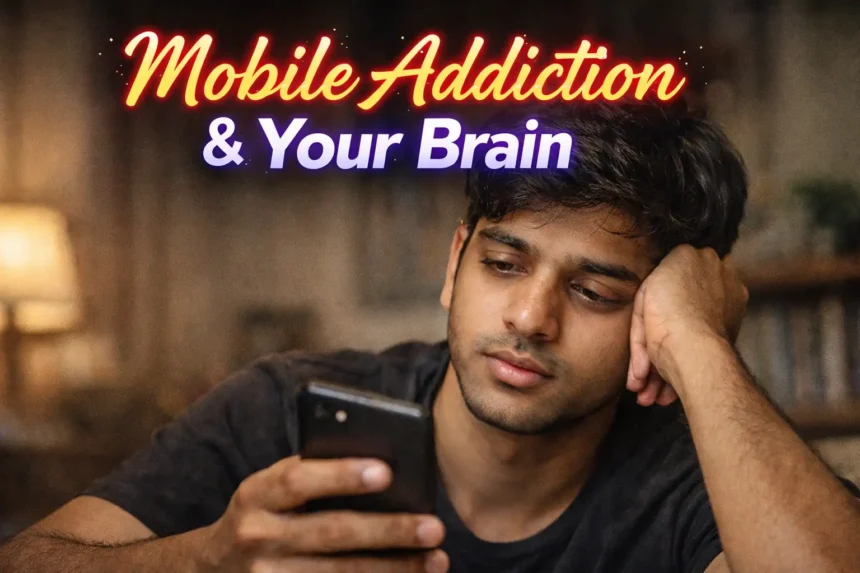
Smartphones Made Life Easier, But Minds Weaker
Smartphones have transformed how Indians live, work, and communicate. From online payments and navigation to entertainment and social connection, mobile phones are now inseparable from daily life. What once felt like a luxury is now a necessity. However, in 2026, a growing concern is emerging beneath this convenience. Mobile addiction is quietly affecting brain health, especially among young adults and working professionals. Many people feel mentally exhausted, unfocused, anxious, and restless without understanding why. The cause is often not stress alone, but constant digital stimulation.
What Is Mobile Addiction?
Mobile addiction is not simply frequent phone usage. It is a behavioral dependency where individuals feel compelled to check their phones repeatedly, even without purpose or necessity. This addiction is driven by notifications, social validation, endless scrolling, and instant rewards. Over time, the brain becomes conditioned to seek constant stimulation, reducing tolerance for silence, focus, and deep thinking.
Why Mobile Addiction Is Worse in 2026
In 2026, smartphones are more addictive than ever. Algorithms are smarter, content is shorter, and engagement is optimized to hold attention for as long as possible. Short videos, instant replies, and personalized feeds create a loop of continuous stimulation. The brain adapts to this fast-paced input, making slow tasks like reading, studying, or reflecting feel uncomfortable.
How Mobile Addiction Changes Brain Chemistry
Excessive phone usage affects dopamine levels in the brain. Dopamine is responsible for motivation and pleasure. Each notification, like, or message provides a small dopamine hit. Over time, the brain craves these frequent rewards and struggles to find satisfaction in everyday activities. This leads to reduced motivation, low attention span, and emotional instability.
Reduced Focus and Shorter Attention Span
One of the most noticeable effects of mobile addiction is declining focus. Constant switching between apps trains the brain to multitask poorly. Tasks that require concentration feel boring or exhausting. This impacts productivity at work, learning ability, and even simple conversations. Many people mistake this for laziness, but it is actually cognitive overload.
Impact on Memory and Learning
The brain retains information better when it processes deeply. Mobile addiction encourages surface-level consumption rather than understanding. Frequent scrolling reduces memory retention, making it harder to recall information. This is especially concerning for students and professionals who rely on learning and decision-making.
Sleep Disruption and Brain Fatigue
Mobile usage before bedtime interferes with sleep quality. Blue light exposure delays melatonin release, the hormone responsible for sleep. Inadequate sleep affects emotional regulation, decision-making, and memory. Chronic sleep disruption leads to mental fatigue, irritability, and long-term cognitive decline.
Emotional Health and Anxiety
Mobile addiction increases anxiety levels. Constant comparison on social media, fear of missing out, and information overload create emotional pressure. People feel connected digitally but isolated emotionally. This paradox contributes to loneliness, mood swings, and reduced self-esteem.
How Mobile Addiction Affects Children and Teenagers
Young brains are especially vulnerable. Excessive screen time during developmental years affects emotional control, patience, and social skills. Parents often notice behavioral changes but underestimate the long-term impact. Early exposure shapes lifelong habits and mental health patterns.
Also read this : Always Tired in 2026? Shocking Health Reasons Indians Are Ignoring Daily
Scientific and Health Perspective
Health organizations like the World Health Organization have consistently highlighted the importance of balanced digital usage for mental well-being. While smartphones are not inherently harmful, uncontrolled usage creates serious health risks.
Why Most People Ignore the Warning Signs
Mobile addiction develops gradually. There is no sudden breakdown or visible injury. Symptoms like fatigue, distraction, and irritability feel normal in modern life. This normalization delays awareness and action, allowing damage to continue silently.
How to Reduce Mobile Addiction Without Quitting Technology
Technology is unavoidable, but control is possible. Limiting notifications, setting screen-free times, and creating phone-free zones help restore balance. Reintroducing boredom, silence, and offline activities allows the brain to recover its natural rhythm. For more information visit WHO official website.
Why Digital Discipline Is Essential in 2026
Mental health challenges are increasing, and mobile addiction is a major contributor. Awareness alone is not enough habits must change. Digital discipline is no longer a lifestyle choice; it is a mental health necessity.
Your Brain Needs Rest, Not Constant Stimulation
In 2026, mobile addiction is one of the most overlooked threats to mental well-being. Smartphones are powerful tools, but uncontrolled usage weakens focus, memory, sleep, and emotional health. The goal is not to abandon technology, but to use it consciously. A healthier brain begins with fewer notifications and more intentional living.