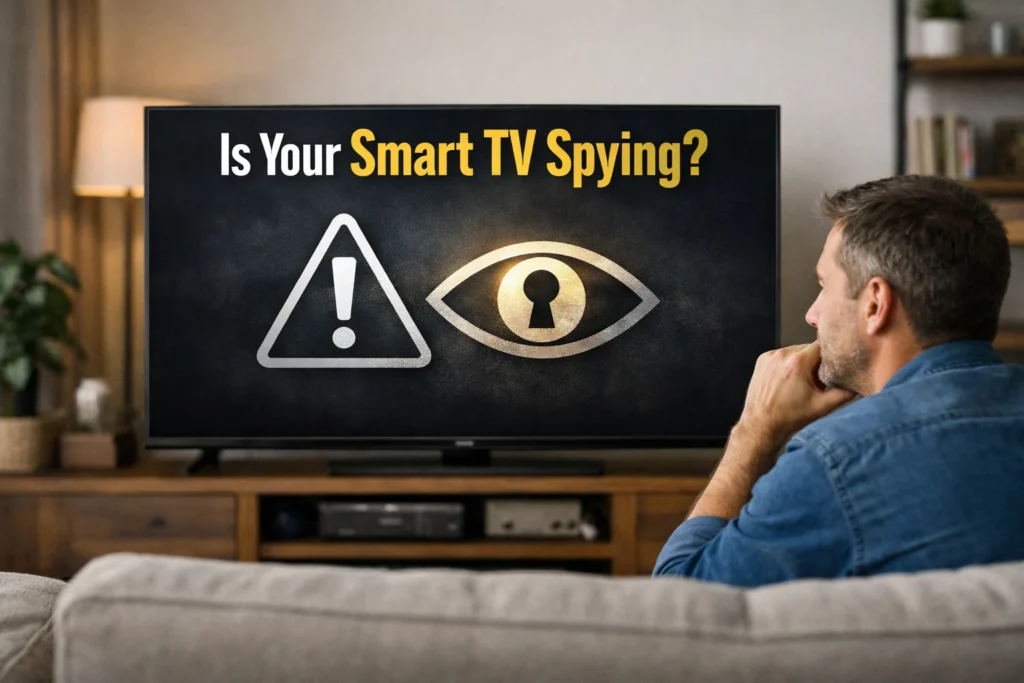
The Screen in Your Living Room Knows More Than You Think
S mart TVs have transformed home entertainment. In 2026, televisions are no longer passive screens; they are internet-connected devices powered by software, sensors, and artificial intelligence. While this makes streaming smoother and recommendations smarter, it also raises a disturbing question: is your Smart TV watching and listening to you? This concern is not paranoia. Modern Smart TVs collect data to personalize content, display targeted ads, and improve performance. However, many users are unaware of how much information is collected, how it is used, and how long it is stored. Understanding the reality behind Smart TV data collection is essential to protect privacy in an increasingly connected home.
How Smart TVs Collect Data in 2026
Smart TVs gather data in several ways. Viewing history is the most obvious. Every show you watch, app you open, and search you make can be tracked. This data helps the TV suggest content and ads tailored to your preferences. Some models also collect device usage data, such as how long the TV is on, which settings you change, and which apps you install or remove. In 2026, advanced analytics allow manufacturers to build detailed user profiles based on this behavior.
Are Smart TVs Listening Through Microphones?
Many Smart TVs come with voice control features. These features rely on built-in microphones to respond to commands. While manufacturers claim that microphones activate only after a wake word or button press, privacy experts warn that “always-on” listening modes may exist for responsiveness. This does not necessarily mean someone is actively listening to conversations. However, audio data may be processed or temporarily stored to improve voice recognition systems. For users concerned about privacy, this raises valid questions about consent and transparency.
Camera Features and Facial Recognition Concerns
Some high-end Smart TVs include cameras for video calls, gesture control, or facial recognition. These features can identify users to personalize profiles or enable hands-free controls. Although convenient, cameras introduce another layer of privacy risk. If improperly secured or misused, they could potentially be accessed without user knowledge. While such incidents are rare, the possibility highlights the importance of understanding device permissions and settings.
Targeted Advertising and Data Sharing
One of the biggest reasons Smart TVs collect data is advertising. In 2026, targeted ads are a major revenue source. Viewing habits help advertisers decide which ads to show and when. In some cases, anonymized data may be shared with third-party partners for analytics and marketing. While companies claim this data does not identify individuals directly, privacy advocates argue that behavioral patterns can still reveal sensitive information about households.
Also read this : Powerful Hidden Smartphone Settings in 2026 That Can Dramatically Save Battery & Internet
What Manufacturers Say About Privacy
Major brands state that data collection is disclosed in privacy policies and user agreements. Companies like Samsung and LG emphasize that users can control privacy settings and opt out of certain data-sharing features.Operating systems and platforms developed by companies such as Google also provide privacy dashboards and permission controls. However, these options are often buried deep within settings menus, and many users never adjust them.
For general consumer guidance on connected device privacy, official resources are available at https://consumer.ftc.gov.
Real Privacy Risks You Should Take Seriously
The biggest risk is not secret surveillance, but silent data accumulation. Over time, collected data can reveal viewing habits, lifestyle patterns, and even daily routines. If this data is breached or misused, it can lead to targeted scams or intrusive advertising. Another risk is outdated software. Smart TVs often receive fewer security updates than smartphones, making older models vulnerable to exploits if connected to the internet continuously.
Simple Steps to Protect Your Privacy on Smart TVs
Protecting privacy does not require giving up Smart TV features entirely. Reviewing privacy settings is the first step. Disabling ad personalization, limiting data sharing, and turning off voice recognition when not needed significantly reduces exposure. Keeping the TV software updated ensures security patches are applied. Using strong Wi-Fi passwords and avoiding unknown third-party apps also improves safety. For users with cameras or microphones, physical covers or disabling features provide additional peace of mind.
Why Awareness Matters More Than Fear
Smart TVs are not evil devices spying on users for malicious reasons. They are commercial products designed to optimize user experience and advertising efficiency. The problem arises when users are unaware of what they have agreed to. Privacy in 2026 is about informed choices. When users understand how devices work, they can balance convenience and security effectively.
The Future of Smart Home Privacy
As homes become smarter, privacy discussions will grow more important. Regulators worldwide are pushing for clearer disclosures and stronger consumer protections. Future Smart TVs are expected to include more transparent privacy controls and easier opt-out options. Until then, users remain the first line of defense. Awareness and proactive settings management are essential.
Also read this : Shocking AI Tools in 2026 That Can Replace Human Jobs (Reality Check)
Control the Technology Before It Controls You
The shocking truth about Smart TVs in 2026 is not that they spy in secret, but that they collect more data than most users realize. This data collection is often legal, disclosed, and intended for personalization. However, without awareness and action, privacy can quietly erode. By understanding how Smart TVs work and adjusting a few key settings, users can enjoy modern entertainment without sacrificing control over their personal space.