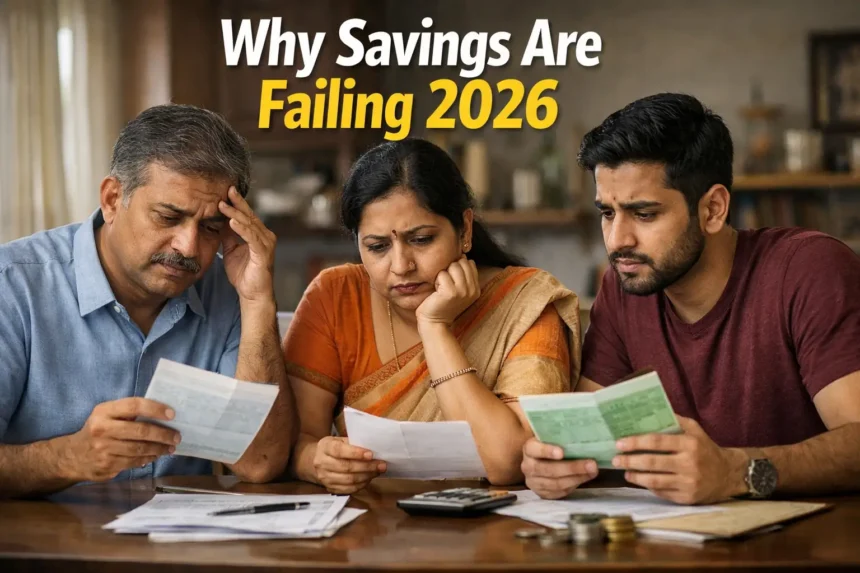
For generations, Indians have been taught one golden rule: save money and you will be safe. Fixed deposits, recurring deposits, and bank savings accounts were considered enough to build a secure future. But in 2026, a harsh reality is becoming impossible to ignore—savings alone are failing Indian families.
Despite saving regularly, many people feel financially stuck. Emergency funds vanish quickly, long-term goals feel distant, and retirement security looks uncertain. The problem is not laziness or lack of discipline. The real issue is that the financial world has changed, but saving habits have not.
What Does “Savings Are Failing” Actually Mean?
Savings are failing when the money you set aside does not grow enough to protect your purchasing power. In simple terms, even though the balance increases, its real value decreases over time. In 2026, many savers are shocked to realize that years of disciplined saving have not translated into financial freedom. Rising costs quietly cancel out the benefits of traditional savings methods.
Inflation: The Silent Enemy of Your Savings
Inflation is the biggest reason savings are failing. Prices of food, healthcare, education, housing, and transport rise every year. Unfortunately, returns on traditional savings often fail to match this rise. When inflation grows faster than savings returns, money loses value. You may save more rupees, but those rupees buy less every year. This slow erosion is rarely noticed until it becomes painful.
Low Interest Rates on Traditional Savings
Bank savings accounts and fixed deposits are considered safe, but safety comes with a cost. In 2026, interest rates on many traditional savings instruments remain relatively low. After adjusting for inflation and taxes, real returns often turn negligible or even negative. This means your money is technically safe, but financially stagnant.
Over-Reliance on Fixed Deposits
Fixed deposits were once reliable wealth protectors. Today, they mostly offer capital protection, not growth. Many middle-class families keep the majority of their money locked in FDs out of fear of risk. This excessive dependence limits long-term growth. While FDs play a role in stability, relying on them exclusively creates a false sense of financial security.
Also read this : Why Middle-Class Life Is Getting Harder in 2026: The Uncomfortable Truth Nobody Talks About
Rising Expenses Are Killing Savings Potential
Modern life is more expensive. EMIs, rent, school fees, insurance premiums, fuel, and digital services consume a large portion of income. Even disciplined savers struggle to save meaningful amounts after essential expenses. Whatever is saved often gets used for emergencies, leaving no compounding benefit.
Medical Emergencies and Financial Shocks
Healthcare costs have become one of the biggest threats to savings. A single medical emergency can wipe out years of savings within weeks. Even insured families face out-of-pocket expenses that drain reserves quickly. This constant fear forces people to hold cash instead of growing wealth, slowing progress further.
Lack of Financial Planning, Not Lack of Income
Many people save randomly without a plan. Money is saved, but without clear goals, timelines, or strategy. Savings without planning often remain idle. Financial planning converts savings into purpose-driven wealth, but most families delay or avoid it due to confusion or fear of complexity.
Taxes Reduce Real Returns Further
Interest earned on savings is taxable. After tax deductions, actual returns reduce even more. Middle-class savers often underestimate the impact of taxes on long-term growth. What looks safe on paper becomes inefficient in reality.
Changing Economic Reality in 2026
The economy today rewards growth-oriented strategies more than pure saving. Salaries rise slowly, while costs rise fast. Depending only on savings is no longer enough to keep pace. Financial institutions like the Reserve Bank of India consistently highlight the importance of balancing safety with growth. Official financial data and reports are available at RBI Official.
Why Fear Keeps People Stuck
Fear of loss stops many Indians from exploring better financial options. Past market crashes, misinformation, and lack of education create resistance to change.
Ironically, avoiding all risk often creates the biggest risk—outliving your savings.
What Indians Need to Do Differently in 2026
Savings should be the foundation, not the final goal. Emergency funds and short-term needs must remain safe, but long-term goals require growth. Understanding inflation, diversifying money, and aligning savings with timelines are essential steps. Financial literacy is no longer optional—it is survival skill.
Common Myths About Savings
Many believe saving more automatically means financial safety. Others assume investing is gambling. Both beliefs are outdated. In reality, smart financial systems balance safety, growth, and liquidity. Blind saving without strategy is no longer effective.
Why This Topic Matters for the Middle Class
The middle class depends heavily on savings for security. When savings fail, stress, insecurity, and frustration increase. Talking openly about this problem helps families adapt before it’s too late. Awareness creates opportunity for smarter decisions.
Saving Alone Is Not Enough Anymore
In 2026, savings are failing not because people are careless, but because the rules have changed. Inflation, low returns, rising costs, and lack of planning have reshaped financial reality. Savings still matter—but only as part of a bigger strategy. Those who understand this shift early will protect their future. Those who don’t will keep saving, yet falling behind.