T he smartphone industry has entered a new phase in 2026, where artificial intelligence is no longer just a background feature but the core of the user experience. AI-powered phones, often referred to as “AI phones,” are redefining how people interact with their devices. From understanding user behavior to predicting needs and optimizing performance automatically, artificial intelligence is making smartphones more personal, efficient, and powerful than ever before.
Unlike earlier years, where AI was limited to camera enhancements or voice assistants, today’s smartphones use AI at the system level. This shift is changing everything from photography and battery life to security, multitasking, and everyday productivity.
What Exactly Is an AI Phone?
An AI phone is a smartphone designed with dedicated hardware and software that allows artificial intelligence to function directly on the device. Instead of relying entirely on cloud processing, modern AI phones use powerful chipsets with built-in neural processing units. These units enable real-time learning, faster responses, and better privacy. In 2026, most flagship and even mid-range smartphones come with AI engines that continuously adapt to user habits. The phone learns how you use apps, when you charge your device, how you type, and even how you hold the phone, all to improve performance and efficiency.
How AI Is Transforming Smartphone Cameras
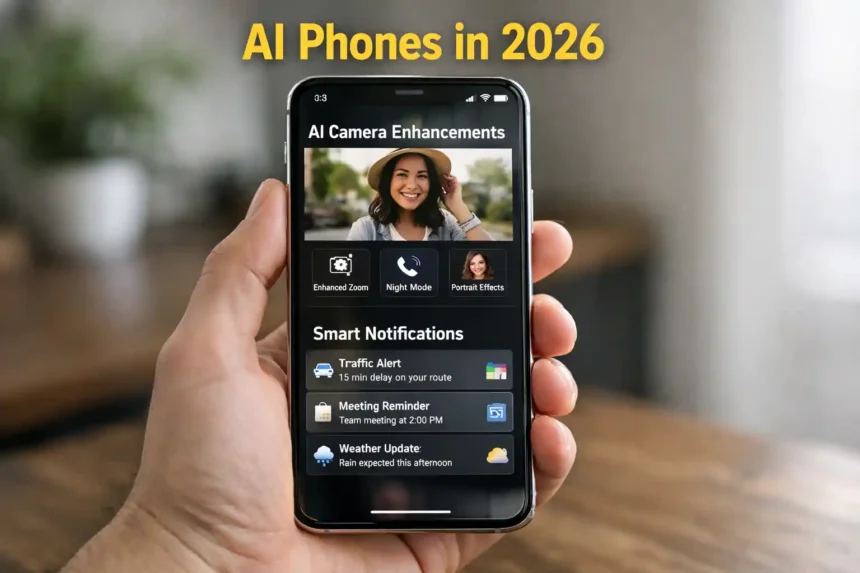
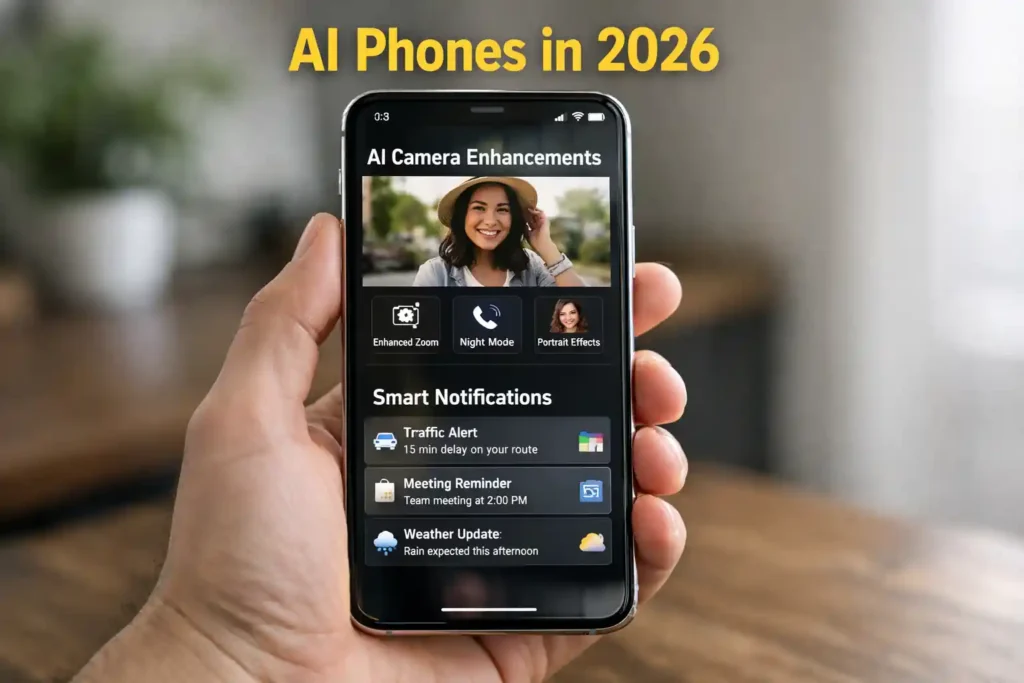
Camera technology is one of the biggest beneficiaries of artificial intelligence. AI-powered cameras now analyze scenes in real time, adjusting exposure, color balance, and focus automatically. Portrait photography has become more accurate, with better edge detection and natural background blur. AI also plays a major role in low-light photography. Instead of relying only on hardware sensors, smartphones now combine multiple frames using AI algorithms to produce clearer and brighter images. Video recording has also improved, with AI stabilizing footage, enhancing voices, and reducing background noise instantly.
Smarter Battery Management with AI
Battery life has always been a concern for smartphone users, and AI is finally providing a practical solution. AI phones in 2026 intelligently monitor usage patterns and adjust power consumption accordingly. Apps that are rarely used are restricted in the background, while frequently used apps get priority resources. Charging has also become smarter. AI learns your daily routine and slows down charging overnight to protect battery health, completing the charge just before you wake up. This not only extends battery lifespan but also improves long-term performance.
Also read this : Best Flagship Phones of 2025: Samsung Galaxy S25 Ultra, iPhone 17 Pro Max, Vivo X300 Pro, and More
AI and Everyday Performance Optimization
Artificial intelligence is now deeply integrated into the operating system. AI manages RAM usage, predicts which apps you will open next, and preloads them for faster access. This results in smoother multitasking and reduced lag, even on mid-range devices. Gaming performance has also improved significantly. AI optimizes graphics, frame rates, and thermal management in real time, ensuring stable performance without overheating. This makes AI phones especially appealing to gamers and power users.
AI-Powered Voice Assistants and On-Device Intelligence
Voice assistants in 2026 are far more advanced than before. They understand context better, respond more naturally, and perform complex tasks without needing constant internet access. On-device AI allows voice commands to be processed locally, improving speed and privacy. Users can now control settings, summarize messages, translate languages in real time, and even generate content using AI tools directly on their phones. This level of intelligence is turning smartphones into personal digital assistants rather than simple communication devices.
Enhanced Security and Privacy Through AI
Security is another area where AI phones are making a major impact. Facial recognition and fingerprint sensors now use AI to improve accuracy and reduce false unlocks. These systems adapt over time, recognizing changes in appearance or usage patterns. AI also helps detect suspicious activities such as unusual app behavior or unauthorized access attempts. By analyzing patterns rather than relying solely on predefined rules, AI-driven security systems provide stronger protection against evolving threats.
AI in Budget and Mid-Range Smartphones
Earlier, advanced AI features were limited to premium devices. In 2026, this is no longer the case. Many budget and mid-range smartphones now include AI-based camera modes, battery optimization, and performance enhancements. This democratization of AI technology is making advanced smartphone experiences accessible to a wider audience. Consumers no longer need to buy expensive flagship models to benefit from intelligent features.
Also read this : Best 5G Smartphones Under ₹20,000 in January 2026: Top 5 Phones
The Role of Big Tech in AI Phone Evolution
Major smartphone brands are investing heavily in AI research and development. Companies like Google, Samsung, and Apple are integrating AI deeply into their hardware and software ecosystems. Operating systems such as Android and iOS are evolving rapidly to support on-device intelligence, making AI a standard part of future smartphone experiences. For official updates and announcements, users can refer to https://www.android.com.
Challenges and Concerns Around AI Phones
Despite the advantages, AI phones also raise concerns. Data privacy remains a major topic, as AI systems rely on user data to learn and adapt. Manufacturers claim that on-device processing reduces data sharing, but transparency remains crucial. There is also the challenge of dependency. As smartphones become more intelligent, users may rely heavily on automated decisions, raising questions about control and digital well-being.
AI Phones Are the Future of Smartphones
In 2026, AI phones are no longer a futuristic concept; they are a reality shaping everyday life. Artificial intelligence is making smartphones smarter, faster, more secure, and more personalized. From photography and battery life to performance and privacy, AI is redefining what users can expect from their devices. As technology continues to evolve, AI-powered smartphones are set to become even more integral to how people work, communicate, and live.