
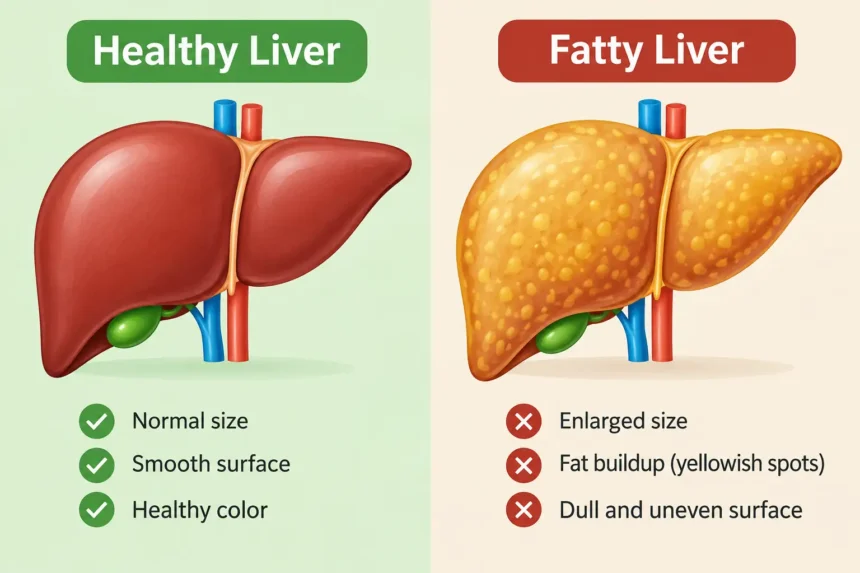
Fatty liver disease has quietly turned into one of the most common liver problems worldwide, and a large share of people who have it don’t know it yet. That’s the tricky part. The liver doesn’t complain loudly. It keeps working even while it’s under strain, so the early signals tend to be things people write off as stress, poor sleep, or just getting older.
- 1. Fatigue That Doesn’t Go Away With Rest
- 2. Discomfort Under the Right Ribs
- 3. Belly Fat That Keeps Creeping Up
- 4. Bloating and Feeling Full Too Quickly
- 5. Unusually Dark Urine or Pale Stools
- 6. Yellowing of the Skin or Eyes
- 7. Swelling in the Legs, Ankles, or Abdomen
- 8. Itchy Skin, Spider Veins, or Easy Bruising
- 9. High Blood Sugar or Cholesterol on Routine Bloodwork
- 10. Feeling Completely Fine – Which Is the Real Danger
- Why Fatty Liver Disease Is Becoming So Common
- How Fatty Liver Disease Is Diagnosed
- Diet and Lifestyle Changes That Actually Help
- FAQ
Doctors define fatty liver disease as a buildup of excess fat inside liver cells. Left alone, that fat buildup can lead to inflammation, scarring, and – in advanced cases – cirrhosis or liver failure. It’s commonly tied to obesity, low activity levels, type 2 diabetes, high cholesterol, and poor diet, but you don’t need to drink heavily to develop it. Non-alcoholic fatty liver disease (NAFLD) is now one of the most frequently diagnosed liver conditions in routine checkups.
Below are ten signs worth paying attention to, especially if you’re at higher risk because of weight, blood sugar, or cholesterol issues.
1. Fatigue That Doesn’t Go Away With Rest

Ongoing tiredness is one of the symptoms people report most often. It’s not the usual “I need more sleep” kind of tired – many describe it as a heavier, dragging exhaustion that sticks around even after a full night’s rest. One theory is that when the liver isn’t processing nutrients and toxins efficiently, it throws off metabolism and raises low-grade inflammation, both of which sap energy. Because so many people are already sleep-deprived or stressed, this symptom is easy to miss for months or years.
Also read : Waking Up Every Night at 3 AM ? Causes, Stress, Cortisol & What to Do.
2. Discomfort Under the Right Ribs
The liver sits in the upper right part of the abdomen, just under the ribs. As fat accumulates and inflammation sets in, some people notice pressure, fullness, or a dull ache in that spot – often worse after eating. It’s rarely sharp or severe, which is exactly why it gets mistaken for gas, indigestion, or a pulled muscle. If that heaviness under the right ribs keeps showing up, it’s worth mentioning to a doctor rather than waiting it out.
3. Belly Fat That Keeps Creeping Up
Fatty liver is closely linked to visceral fat – the fat that sits around your organs rather than just under the skin. Many people notice their waistline expanding even without eating much differently, because insulin resistance and metabolic dysfunction can drive both liver fat and abdominal fat at the same time. This is part of why fatty liver so often shows up alongside high blood sugar and high triglycerides rather than as a standalone issue.
4. Bloating and Feeling Full Too Quickly
Nausea, bloating, or feeling stuffed after a small meal are common but easy-to-dismiss symptoms. Digestive discomfort has dozens of possible causes, so it rarely gets connected to the liver in people’s minds. But when liver function is compromised, digestion and metabolism can both take a hit, leading to gas, heaviness after eating, and general stomach irritation that doesn’t have an obvious trigger.
5. Unusually Dark Urine or Pale Stools
This one is more specific and shouldn’t be ignored. The liver plays a central role in processing bile, and when that process is disrupted, urine can turn noticeably darker and stools can become pale or clay-colored. These changes tend to show up once liver stress is more advanced, so if you notice them persisting for more than a couple of days, it’s a signal to get checked rather than wait.
More Read

6. Yellowing of the Skin or Eyes
Jaundice – a yellow tint in the skin or the whites of the eyes – happens when bilirubin builds up in the blood because the liver can’t clear it properly. This symptom usually points to more advanced liver dysfunction rather than early-stage fatty liver, but it’s one of the clearest red flags there is. Any yellowing, even mild, deserves prompt medical attention.
7. Swelling in the Legs, Ankles, or Abdomen
As liver damage progresses, the body can start retaining fluid. That might show up as puffiness in the ankles and legs, or in more serious cases, fluid buildup in the abdomen known as ascites. Swelling has plenty of other causes too – heart or kidney issues among them – which is exactly why people don’t always connect it to their liver. Persistent, unexplained swelling is worth raising with a doctor.
8. Itchy Skin, Spider Veins, or Easy Bruising
When the liver struggles to filter the blood properly, certain compounds can build up and trigger itching that has no obvious cause like a rash or dry skin. Some people also develop small spider-like blood vessels near the surface of the skin, reddened palms, or bruise more easily than usual. These changes are subtle and often get chalked up to aging or dry weather rather than liver health.
9. High Blood Sugar or Cholesterol on Routine Bloodwork
A huge number of fatty liver cases get picked up almost by accident – during a blood test ordered for something else, like high cholesterol, high triglycerides, or elevated blood sugar. That’s because fatty liver, insulin resistance, and metabolic syndrome tend to develop together. If your labs show borderline blood sugar or cholesterol numbers, it’s a reasonable moment to ask your doctor whether a liver check makes sense too.
10. Feeling Completely Fine – Which Is the Real Danger
The most unsettling part of fatty liver disease is how often it causes no noticeable symptoms at all. Plenty of people find out they have it only after a routine ultrasound or blood panel done for an unrelated reason, by which point there can already be meaningful fat buildup or inflammation in the liver. This is exactly why relying on symptoms alone isn’t a safe strategy – regular checkups matter more than waiting to feel something.
The most dangerous symptom of fatty liver disease is feeling like nothing’s wrong at all.
ON SILENT LIVER DAMAGE
Why Fatty Liver Disease Is Becoming So Common
Sedentary routines, processed food, sugary drinks, poor sleep, chronic stress, and rising obesity rates are all feeding into this trend, and it’s no longer limited to older adults – younger adults and even children are being diagnosed more often now. Genetics play a role too; some people carry a higher inherited risk even at a normal weight, which is why doctors increasingly recommend liver screening as part of routine metabolic checkups rather than only for people who are visibly overweight. The upside is that early-stage fatty liver disease often responds well to lifestyle changes: losing even a modest amount of weight, cutting back on added sugar, moving more, and getting metabolic markers like blood sugar and cholesterol under control can meaningfully improve or even reverse it before it turns into something more serious.
How Fatty Liver Disease Is Diagnosed
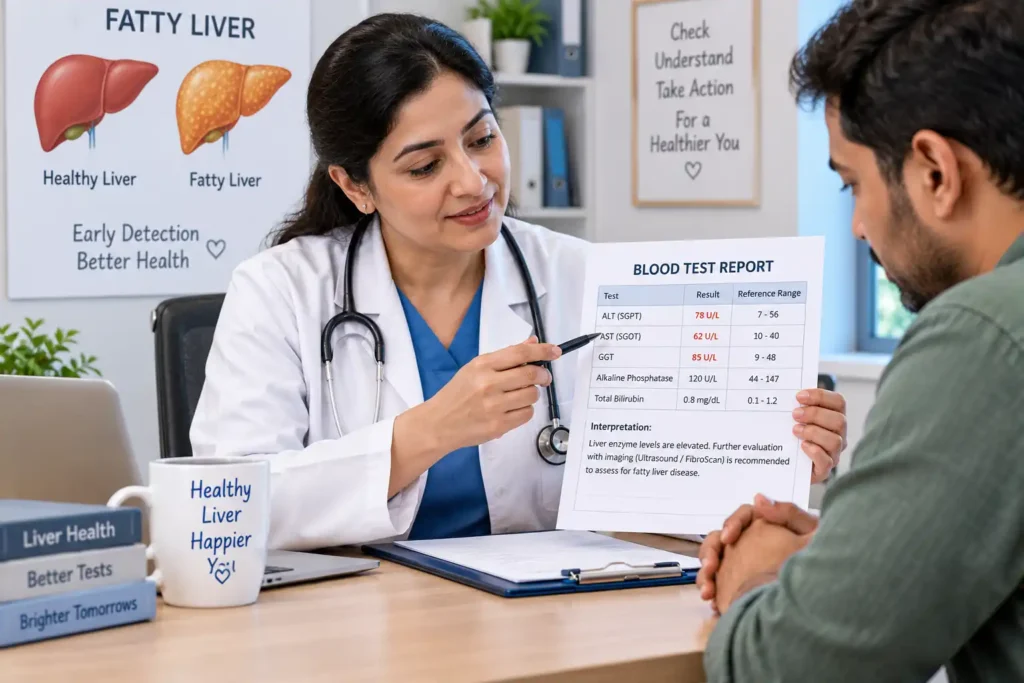
Because symptoms are so unreliable in the early stages, diagnosis usually starts with a blood test rather than a physical complaint. Liver function tests (LFTs) check enzyme levels like ALT and AST, which tend to run higher when liver cells are inflamed or under stress. If those numbers look off, the next step is typically an abdominal ultrasound, which can show fat buildup directly. For a closer look at scarring or fibrosis, doctors may order a FibroScan, a quick, non-invasive test that measures liver stiffness. A liver biopsy is reserved for cases where the diagnosis is unclear or the disease appears more advanced. None of these tests require symptoms to be present first – which is exactly the point. Many people are diagnosed purely through screening tied to their weight, blood sugar, or cholesterol profile.
Diet and Lifestyle Changes That Actually Help

The good news is that fatty liver disease responds well to changes that don’t require anything exotic. Losing around 7 to 10 percent of body weight has been shown to meaningfully reduce liver fat in many people, and it doesn’t have to happen quickly to work. Cutting back on added sugar and refined carbohydrates – sodas, sweets, white bread, packaged snacks – tends to make a bigger difference than cutting fat from the diet altogether, since excess sugar converts to fat in the liver more directly than people expect. Regular movement helps too, and it doesn’t need to be intense; brisk walking most days of the week has been linked to measurable improvement. Beyond diet and exercise, keeping blood sugar, blood pressure, and cholesterol within a healthy range supports the liver indirectly, since fatty liver rarely shows up in isolation from those other metabolic factors. Alcohol, even in moderate amounts, is worth limiting further if fatty liver has already been flagged, since it adds extra strain to a liver that’s already working harder than it should.
FAQ
Can fatty liver disease be reversed ?
In its early stages, yes, often through sustained weight loss, dietary changes, and better blood sugar and cholesterol control. Once scarring (fibrosis) sets in, damage becomes harder to fully reverse, which is why catching it early matters.
Do you need to drink alcohol to get fatty liver disease ?
No. Non-alcoholic fatty liver disease (NAFLD) develops in people who drink little or no alcohol and is instead linked to obesity, insulin resistance, poor diet, and metabolic conditions.
What tests detect fatty liver disease ?
Doctors typically start with liver function blood tests, followed by an abdominal ultrasound. A FibroScan or, less commonly, a liver biopsy may be used to check for scarring if fat buildup is confirmed.
Is fatty liver disease painful ?
Not usually in the early stages. When discomfort does occur, it’s typically a dull ache or pressure under the right ribs rather than sharp pain.
Who is most at risk of fatty liver disease ?
People with obesity, type 2 diabetes, high cholesterol, high triglycerides, or metabolic syndrome are at higher risk, though it can occur in people without any of these conditions too.
This article is for general information and isn’t a substitute for professional medical advice. If you’re experiencing persistent symptoms, please consult a doctor.