
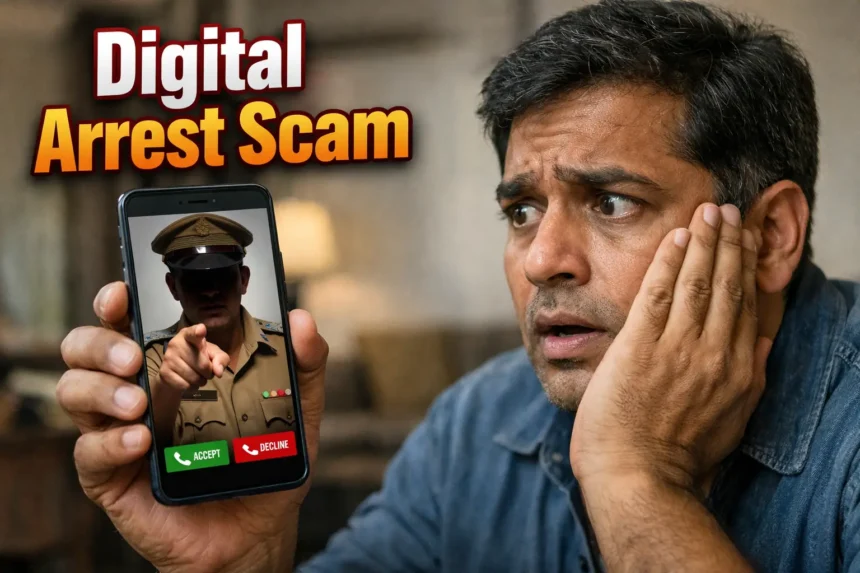
In 2026, one of the most frightening and fast-spreading online frauds in India is the so-called Digital Arrest Scam. Victims receive calls claiming they are under “digital arrest” by police, cyber crime, or government agencies. The callers sound authoritative, use legal terms, and create panic by alleging serious crimes such as money laundering or illegal transactions. What makes this scam extremely dangerous is fear. Victims are told they will be arrested immediately unless they follow instructions. In panic, many people end up transferring money, sharing personal details, or staying on long video calls for hours. Understanding how this scam works is critical to avoid falling into its trap.
What Is a Digital Arrest Scam?
A digital arrest scam is a fraud where criminals impersonate law enforcement or government officials and falsely claim that the victim is under investigation. They insist that the victim is “digitally detained,” meaning they must stay on call, not contact anyone, and comply with instructions. There is no such legal concept as digital arrest in India. Arrests can only be made physically by authorized officers following due legal process. Scammers invent this term to sound modern and convincing in the digital age.
How the Digital Arrest Scam Usually Starts
The scam typically begins with a phone call, WhatsApp call, or video call. The caller introduces themselves as an officer from cyber crime, police, customs, or another government department. They may use fake ID cards, uniforms, or official-looking video backgrounds. Victims are told their Aadhaar, bank account, or mobile number has been linked to a serious crime. The caller then warns that immediate arrest is coming unless the victim cooperates fully.
Also read this : Most Dangerous Mobile Apps in 2026 That Can Secretly Steal Your Data
Psychological Pressure: The Core Weapon of This Scam
The success of the digital arrest scam depends on psychological pressure. Scammers speak confidently, use legal jargon, and threaten severe consequences. Victims are told not to disconnect the call or speak to family members, claiming it will “worsen the case.” By isolating the victim and keeping them under constant fear, scammers gain complete control. Even educated and tech-savvy individuals have fallen victim to this manipulation.
Fake Verification and Money Transfer Demands
To make the scam believable, fraudsters may ask victims to verify accounts or prove innocence. This often involves transferring money to a “safe” or “government” account for verification. In reality, this account belongs to the scammer. Some victims are asked to download screen-sharing apps or stay on video calls while transferring funds. Once money is transferred, it is quickly moved across multiple accounts, making recovery difficult.
Why Digital Arrest Scams Are Increasing in 2026
Several factors have contributed to the rise of this scam. Increased digital payments, widespread fear of cyber crime, and limited legal awareness make people vulnerable. Scammers exploit the trust people place in authority figures and official language. The availability of personal data through leaks and social engineering allows scammers to sound convincing by quoting real details such as names, phone numbers, or partial bank information.
The Legal Truth Every Indian Must Know
No police officer or government authority can arrest you over a phone or video call. Legal notices are never issued verbally, and money is never demanded for “case settlement” or “verification.” Law enforcement agencies like Indian Police follow strict legal procedures. Any genuine investigation involves written notices, physical verification, and court oversight. For official reporting and awareness, the government operates the National Cyber Crime Reporting Portal, which is the only authorized platform for cyber crime complaints.
Also read this : Powerful Hidden Smartphone Settings in 2026 That Can Dramatically Save Battery & Internet
How to Identify a Digital Arrest Scam Instantly
Certain red flags clearly indicate a scam. Any call demanding secrecy, immediate action, or money transfer is suspicious. Threats of instant arrest without written notice are another clear warning sign. Requests to stay on continuous calls, share OTPs, or move funds urgently should never be entertained. Genuine authorities never operate this way.
What To Do If You Receive Such a Call
If you receive a digital arrest call, disconnect immediately. Do not argue, explain, or try to prove innocence. Block the number and inform family members. If any money or information has already been shared, report the incident immediately through the cyber crime helpline and official portal. Quick action improves the chance of preventing further damage. For verified guidance, citizens should rely only on Cyber crime portal.
Why Reporting These Scams Is Important
Many victims stay silent due to embarrassment or fear. This allows scammers to continue targeting others. Reporting helps authorities track fraud patterns, block numbers, and issue public warnings. Every complaint strengthens the system and protects future victims.
How to Protect Yourself and Your Family
Awareness is the strongest defense. Discuss such scams openly with family members, especially elderly parents and young adults. Encourage everyone to verify information calmly instead of reacting to threats. Remember that fear is the scammer’s weapon. Knowledge takes that power away.
Fear Is Fake, Law Is Real
The digital arrest scam thrives on fear, misinformation, and urgency. In 2026, understanding the legal reality is essential for digital safety. No authority can arrest you digitally, demand money over calls, or force secrecy. Staying calm, disconnecting suspicious calls, and reporting incidents promptly can save not just your money, but your peace of mind. Awareness turns fear into protection.