Why Ads Know Exactly What You Talk About
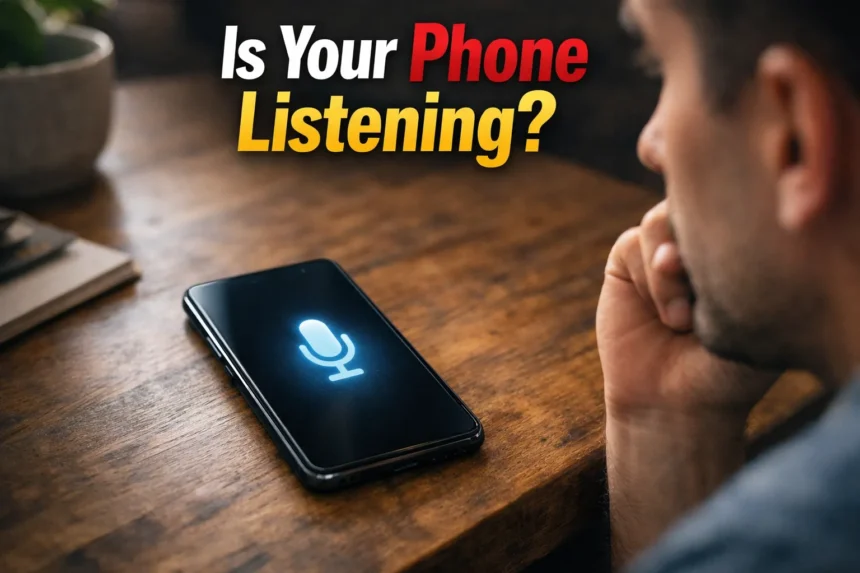
In 2026, almost everyone has experienced this unsettling moment. You talk about a product with a friend, and within minutes, ads for the same item start appearing on your phone. This raises a disturbing question: Is my smartphone listening to me?
While technology companies deny “constant listening,” the reality of smartphone data collection is far more complex. Smartphones today are packed with sensors, microphones, and AI-driven systems designed to understand user behavior deeply. Knowing how this works is essential for protecting your privacy.
How Smartphones Use Microphones in Daily Life
Modern smartphones rely heavily on microphones. Voice assistants, voice typing, video calls, and app features all require microphone access. In 2026, voice-based interaction has increased significantly, making microphones more active than ever. Most operating systems claim that microphones activate only when users grant permission. However, many users unknowingly allow microphone access to apps that do not truly need it, creating unnecessary privacy exposure.
Are Phones Constantly Listening?
Smartphones are not designed to record conversations continuously due to battery and data constraints. However, they do actively listen for trigger words like “Hey” or “OK” to activate assistants. The real concern lies in data patterns, not direct eavesdropping. Phones track searches, location, app usage, browsing behavior, and interactions across apps. This data allows systems to predict interests with alarming accuracy, creating the illusion of constant listening.
How Apps Collect More Data Than You Expect
Many apps request microphone access even when it seems unnecessary. Gaming apps, shopping apps, and social media platforms may ask for permissions that go beyond their core function. Once permission is granted, data can be analyzed to improve ad targeting, user engagement, and personalization. In 2026, AI systems connect multiple data points to build detailed user profiles.
The Role of Voice Assistants in Privacy Concerns
Voice assistants have become deeply integrated into smartphones. They offer convenience but also raise privacy questions. Accidental activations can occur, capturing short audio snippets unintentionally. Technology companies state that these recordings are anonymized and used to improve services. Still, privacy experts argue that even anonymized data can reveal personal patterns over time.
Also read this : Most Dangerous Mobile Apps in 2026 That Can Secretly Steal Your Data
Why Ads Feel “Too Accurate”
Targeted advertising in 2026 is powered by artificial intelligence. Instead of listening to conversations, systems analyze behavior across platforms. What you search, watch, like, or pause on contributes to ad selection. Companies like Google and Meta use advanced algorithms to predict interests. This predictive targeting is often mistaken for direct listening. Official explanations on ad personalization are available at Google Policy’s.
Real Privacy Risks Users Should Worry About
The biggest risk is not someone listening live, but long-term data storage and profiling. Data breaches, third-party sharing, and poor app security expose users to identity theft and scams. Older phones with outdated software are especially vulnerable. Without regular updates, security gaps remain open.
How to Check Which Apps Access Your Microphone
Smartphones now provide permission dashboards showing which apps accessed the microphone recently. Many users are surprised to see how often apps use it. Reviewing these settings regularly helps identify unnecessary access. Revoking permissions from non-essential apps immediately reduces privacy risks.
Simple Steps to Protect Smartphone Privacy in 2026
Protecting privacy does not require technical expertise. Limiting microphone access, disabling voice assistants if unused, and installing apps only from trusted developers makes a significant difference. Keeping the operating system updated ensures the latest security patches are active. Avoiding free apps that rely heavily on ads also reduces data exposure.
Common Myths About Smartphone Spying
A popular myth is that phones record and send full conversations to advertisers. This is highly unlikely due to technical limitations. Another myth is that privacy settings do nothing, which is false. Properly configured settings significantly limit data collection and improve control over personal information.
Why Privacy Awareness Matters More in 2026
As digital life expands, privacy awareness becomes as important as financial literacy. Smartphones now contain banking data, personal photos, work details, and private conversations. Ignoring privacy risks increases vulnerability to fraud, blackmail, and identity misuse. Awareness empowers users to enjoy technology safely.
The Future of Smartphone Privacy
Governments and regulators are pushing for stricter data protection laws. Transparency requirements and permission controls are expected to improve further. However, user responsibility remains crucial. No system can fully protect users who ignore permissions and warnings.
Your Phone Is Smart, Be Smarter
In 2026, smartphones are incredibly intelligent—but not evil. They do not secretly spy in the way many fear, but they do collect vast amounts of data. Understanding how this data is gathered and used removes fear and restores control. Privacy is not about paranoia; it is about informed choices. When users manage permissions wisely, smartphones remain powerful tools without becoming privacy threats.