
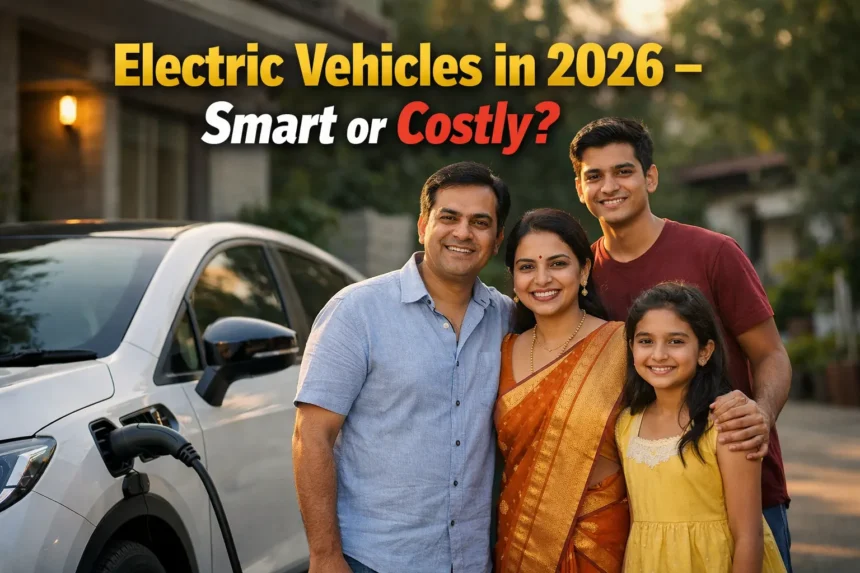
Electric Vehicles in 2026 – Smart Choice or Expensive Trend?
Electric Vehicles in 2026 are no longer a futuristic concept. They are now visible on Indian roads in large numbers, from compact electric cars to premium EV SUVs. With rising petrol prices and increasing environmental awareness, many middle-class families are seriously considering switching to electric mobility. But the big question remains: Are EVs truly saving money, or is the idea of savings just smart marketing? In this detailed guide, we will explore the real EV cost comparison in India, long-term savings, maintenance expenses, and whether an electric car is worth buying in 2026.
Why Electric Vehicles in 2026 Are Trending
Government incentives, improved charging infrastructure, and rising fuel costs have accelerated the adoption of electric vehicles. In metro cities especially, EV charging stations are becoming more common, making daily commuting easier. Automobile manufacturers are launching new EV models with better battery range and affordable pricing. As technology improves, the future of electric vehicles looks stronger than ever. However, before making a decision, it’s important to understand the full financial picture.
Petrol vs Electric Car 2026: Initial Cost Comparison
When comparing Petrol vs Electric car 2026, the first difference is the upfront price. Electric cars are generally more expensive than petrol cars in the same segment. For example, an entry-level petrol car might cost ₹6–7 lakh, while its electric counterpart could cost ₹9–12 lakh. This price difference makes many buyers hesitate. However, EV owners save significantly on fuel costs. Electricity is much cheaper compared to petrol. On average, EV charging cost in India per kilometer is far lower than petrol expenses. So while the initial investment is higher, the running cost is substantially lower.
Running Cost and Fuel Savings
Let’s look at a practical example. If a petrol car gives 18 km per liter and petrol costs around ₹110 per liter, the per-kilometer cost becomes roughly ₹6–7. On the other hand, an electric car typically costs ₹1–1.5 per kilometer in electricity charges when charged at home. Over five years, this difference can lead to major savings. For middle-class families who travel daily for work or school, these savings can significantly reduce monthly expenses.
Electric Car Maintenance Cost
One of the biggest advantages of Electric Vehicles in 2026 is lower maintenance. EVs have fewer moving parts compared to petrol or diesel cars. There is no engine oil, no clutch, and fewer mechanical components. This results in lower servicing costs. Brake wear is also reduced because of regenerative braking technology. However, battery replacement is the biggest long-term concern. Most EV batteries come with warranties of 8 years or more, but replacing them after that period can be expensive. Fortunately, battery technology is improving rapidly, and costs are gradually decreasing.
Charging Infrastructure and Convenience
Earlier, charging infrastructure was a major challenge. In 2026, the situation has improved significantly. Public charging stations are increasing in cities and highways. Home charging is the most economical and convenient option. Many EV owners install a dedicated charger at home, allowing overnight charging.
According to government data available on the Ministry of Heavy Industries website, India continues to expand its EV charging network under national electric mobility initiatives. Still, people living in apartments without dedicated parking may face practical challenges.
Are EV Savings Real for Middle-Class Families?
For middle-class families, every financial decision matters. The higher upfront cost of EVs may require a larger loan or EMI. However, the monthly savings on fuel can balance this over time. If you plan to use the car for 5–7 years and drive regularly, EV savings for middle-class families can be substantial. But if your driving is minimal, the cost advantage may not be very significant. It ultimately depends on usage patterns, city infrastructure, and long-term ownership plans.
Environmental and Future Benefits
Apart from financial aspects, electric vehicles contribute to reduced air pollution and lower carbon emissions. As India focuses more on sustainable energy, EVs are expected to become even more affordable and efficient. Many experts believe that the future of electric vehicles will include better battery range, faster charging, and lower production costs. Buying an EV today may also increase resale value if demand continues to rise.
When Should You Avoid Buying an EV?
Electric vehicles may not be ideal if you frequently travel long distances in areas with limited charging stations. Additionally, if your budget is very tight and you cannot manage a higher initial cost, a fuel-efficient petrol car may be more practical. It is important to calculate total ownership cost rather than focusing only on marketing claims.
Is an Electric Vehicle Worth Buying in 2026?
Electric Vehicles in 2026 are not just a trend—they are a serious alternative to petrol cars. For middle-class families with regular daily usage, EVs can offer meaningful savings over time. However, the decision should be based on careful EV cost comparison in India, lifestyle needs, and financial capacity. If you prioritize long-term savings, lower maintenance, and environmental benefits, an electric vehicle may be a smart move. But if your usage is limited and infrastructure is uncertain in your area, waiting a few more years could also be a reasonable choice. The key is not hype, but informed decision-making.
Also read this : FASTag New Rules 2026: Toll Plaza Entry–Exit, Penalty and Balance Rules