
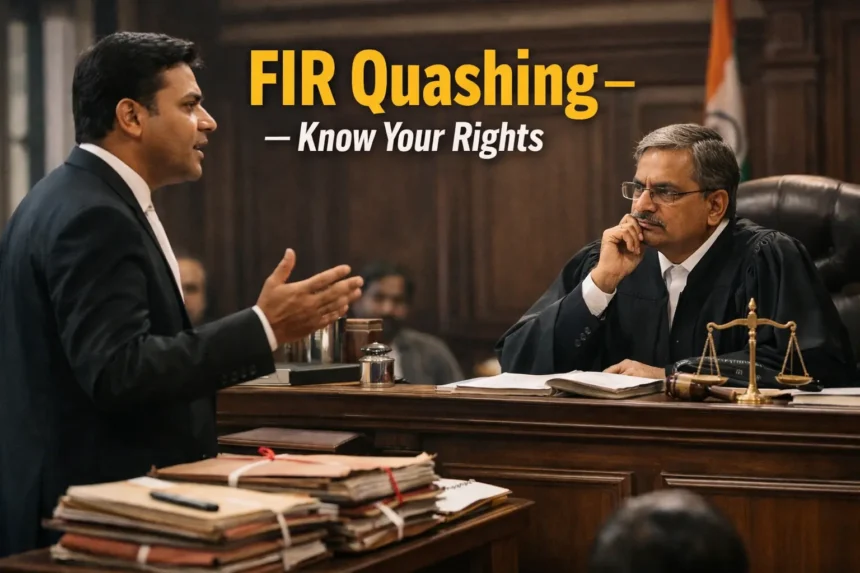
FIR Quashing in India 2026 Explained Simply
FIR quashing in India has become a widely discussed legal remedy, especially in cases involving relationship disputes, business conflicts, and family matters. Many individuals believe that once an FIR is registered, arrest and trial are unavoidable. However, the law provides protection against misuse of criminal proceedings. High Courts in India have the power to quash an FIR if it is found to be false, malicious, or legally unsustainable. Understanding the legal grounds for FIR quashing can protect individuals from unnecessary harassment and lengthy litigation.
This blog explains the concept in simple language, the role of the High Court, and the powerful legal principles laid down by the Supreme Court.
What Is FIR Quashing?
An FIR (First Information Report) is the starting point of a criminal investigation. However, if the allegations in the FIR do not disclose any offense or are clearly motivated by personal revenge, the accused can approach the High Court.
Under Section 482 of the Criminal Procedure Code (CrPC), High Courts have inherent powers to prevent abuse of the legal process and to secure the ends of justice. Even after the introduction of new criminal laws, the principle of inherent judicial power remains applicable. FIR quashing in India is not automatic. Courts carefully examine the facts, documents, and circumstances before making a decision.
The Landmark Guidelines: Bhajan Lal Case
The most important judgment governing FIR quashing is State of Haryana v. Bhajan Lal. In this case, the Supreme Court laid down specific categories where an FIR can be quashed. These guidelines continue to guide High Courts even in 2026.
7 Powerful Legal Grounds for FIR Quashing
1. When Allegations Do Not Constitute an Offense
If the facts mentioned in the FIR, even if taken at face value, do not make out any criminal offense, the High Court may quash the FIR.
2. When Allegations Are Absurd or Improbable
If the story in the FIR is clearly unrealistic or impossible, courts may intervene.
3. When There Is No Evidence to Support the Complaint
If investigation reveals no supporting material and the case appears fabricated, FIR quashing becomes possible.
4. When the Dispute Is Purely Civil in Nature
Business disputes, property conflicts, or contractual disagreements are sometimes given a criminal color. If the matter is essentially civil, courts may quash criminal proceedings.
5. When FIR Is Filed with Malicious Intent
If it is clear that the complaint was filed to harass, blackmail, or settle personal scores, the High Court may step in.
6. When There Is Legal Bar to Proceedings
If law clearly prohibits prosecution without prior sanction or permission, and such sanction is missing, proceedings may be quashed.
7. When Parties Have Settled the Matter
In certain compoundable offenses, if both parties reach a lawful settlement, courts may quash the FIR to promote justice.
Also read this : False Promise to Marry Cases in India 2026: Latest Supreme Court Guidelines You Must Know
Role of the Supreme Court in FIR Quashing
Apart from Bhajan Lal guidelines, the Supreme Court has delivered several judgments reinforcing that criminal law cannot be misused as a pressure tactic.
For example, in Neeharika Infrastructure Pvt. Ltd. v. State of Maharashtra, the Court clarified that while High Courts have the power to quash FIRs, they must exercise caution and not interfere routinely at the investigation stage unless strong grounds exist. These decisions ensure balance between protecting innocent individuals and allowing genuine investigations.
How to File for FIR Quashing in 2026
The accused must file a petition before the concerned High Court with supporting documents, evidence, and legal arguments. The Court may issue notice to the State and complainant. If the Court is satisfied that continuing proceedings would amount to abuse of process, it can quash the FIR and related criminal case. Legal representation by an experienced criminal lawyer is crucial, as drafting and argument quality significantly affect the outcome.
Important Precautions Before Seeking Quashing
FIR quashing in India is not a shortcut to escape genuine allegations. Courts analyze facts carefully. Filing a weak petition without proper grounds may lead to dismissal. It is also important to preserve evidence such as chats, emails, agreements, and witness details. Documentary proof strengthens the case for quashing.
Why Legal Awareness Matters in 2026
With rising false complaints and increasing legal disputes, understanding criminal procedure is essential. Many individuals panic after receiving notice from police. However, the law provides remedies and safeguards. Timely legal advice can prevent arrest, reputational damage, and prolonged stress.
FIR Quashing Is a Powerful but Careful Remedy
FIR quashing in India remains a powerful legal protection against misuse of criminal law. The Bhajan Lal guidelines continue to serve as the foundation for judicial decisions. However, this remedy must be used responsibly and with proper legal guidance. Courts aim to balance justice for complainants and protection for the innocent. If you believe an FIR has been filed maliciously or without legal basis, understanding your rights and acting promptly can make a significant difference.