Legal terms like FIR, chargesheet, and court process often sound intimidating to common citizens. Many people only encounter these terms when they or someone they know becomes involved in a legal matter. In 2026, with increased legal awareness and updated criminal procedures, understanding these concepts has become more important than ever.
This blog explains the FIR to court process in simple language, helping citizens understand what happens after a complaint is made, how police investigations work, and how a case moves through the courts. Knowing these basics can reduce fear, prevent misinformation, and help people protect their rights.
What Is an FIR and Why Is It Important?
An FIR (First Information Report) is the first official step in a criminal case. It is a written document prepared by the police when they receive information about a cognizable offense. Filing an FIR sets the criminal justice process in motion.
An FIR can be registered at any police station with jurisdiction, and in many cases, zero FIR allows registration even outside the area of occurrence. Once an FIR is registered, the police are legally bound to begin an investigation.
For citizens, the FIR is important because it creates an official record of the complaint. It protects the complainant from denial or manipulation of facts later in the case.
How FIR Registration Works in 2026
In 2026, FIR registration has become more citizen-friendly. Complaints can be registered physically at the police station and, in some states, through online portals for certain categories of offenses.
The complainant must provide accurate details such as date, time, location, and nature of the incident. Once registered, a copy of the FIR must be provided free of cost. This document becomes the foundation of the entire case.
Deliberately filing a false FIR is a punishable offense, so honesty and clarity are crucial.
Also read this : New Criminal Laws 2026 Explained: BNS & BNSS Changes Every Citizen Must Know
What Happens After FIR: Police Investigation Process
After an FIR is registered, the police begin their investigation. This includes visiting the crime scene, collecting evidence, recording witness statements, and questioning suspects.
The goal of the investigation is to determine whether a crime has been committed and who is responsible. Police are required to conduct investigations fairly and within prescribed timelines, especially in serious cases.
During this phase, the accused has legal rights, including the right to a lawyer and protection against unlawful detention.
What Is a Chargesheet?
A chargesheet is a formal document submitted by the police to the court after completing the investigation. It contains details of the accused, evidence collected, witness statements, and the specific charges under which the accused is being prosecuted.
In simple terms, the chargesheet tells the court that the police believe there is enough evidence to proceed with the trial. If evidence is insufficient, the police may submit a closure report instead. In 2026, chargesheets are increasingly being filed digitally to reduce delays and improve transparency.
Timeline for Filing Chargesheet
The law prescribes specific timelines for filing a chargesheet, depending on the seriousness of the offense. For less serious offenses, the timeline is shorter, while serious crimes allow more investigation time. If the chargesheet is not filed within the prescribed period and the accused is in custody, the accused may become eligible for default bail. This provision protects individuals from indefinite detention without trial.
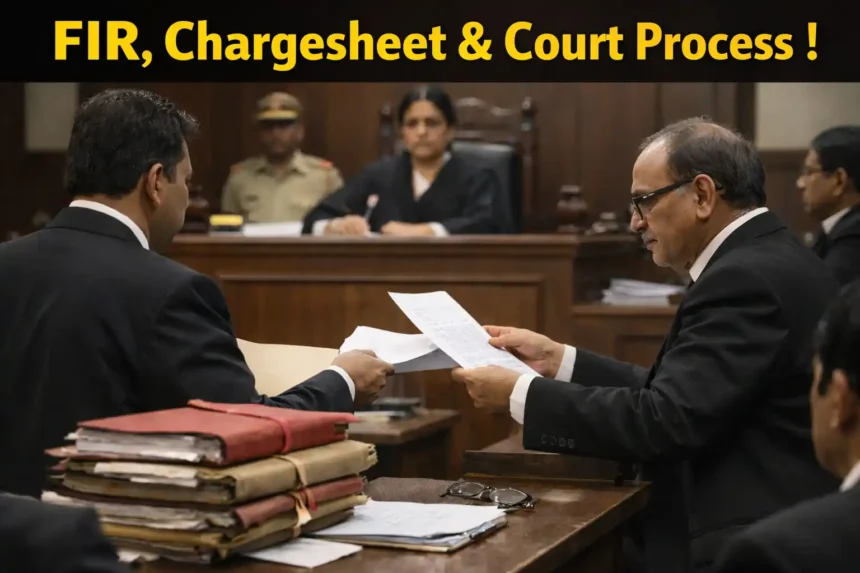
Understanding the Court Process Step by Step
Once the chargesheet is submitted, the court process begins. The court examines the chargesheet and decides whether there is sufficient ground to proceed.
If the court finds merit, charges are framed, and the trial begins. During the trial, the prosecution presents evidence and witnesses, followed by the defense’s arguments. The accused has the right to cross-examine witnesses and present their defense.
After hearing both sides, the court delivers its judgment, which may result in conviction, acquittal, or discharge.
Role of Bail in Criminal Cases
Bail plays a crucial role in the legal process. Bail does not mean the case is over; it simply allows the accused to remain free while the trial continues.
In 2026, courts increasingly emphasize the principle that bail is the rule, jail is the exception, especially in cases involving minor offenses. However, bail decisions depend on factors like offense severity, evidence, and risk of absconding.
Why Legal Awareness Matters for Citizens
Understanding the FIR, chargesheet, and court process empowers citizens to respond calmly and lawfully in difficult situations. Awareness prevents exploitation, unnecessary fear, and reliance on rumors.
Even if someone never faces a legal case, knowing basic procedures helps them support others and engage responsibly with law enforcement agencies.
Official Source for Legal Acts and Procedures
For accurate and updated legal information, citizens should refer to official government portals. Indian laws and procedures are available on the national legislative website: https://www.indiacode.nic.in
The journey from FIR to chargesheet to court judgment is structured, lawful, and designed to balance justice with individual rights. In 2026, procedural reforms and digital systems aim to make this process faster and more transparent.
For common citizens, knowledge is the strongest protection. Understanding legal procedures not only builds confidence but also ensures that rights and responsibilities are respected throughout the justice system.