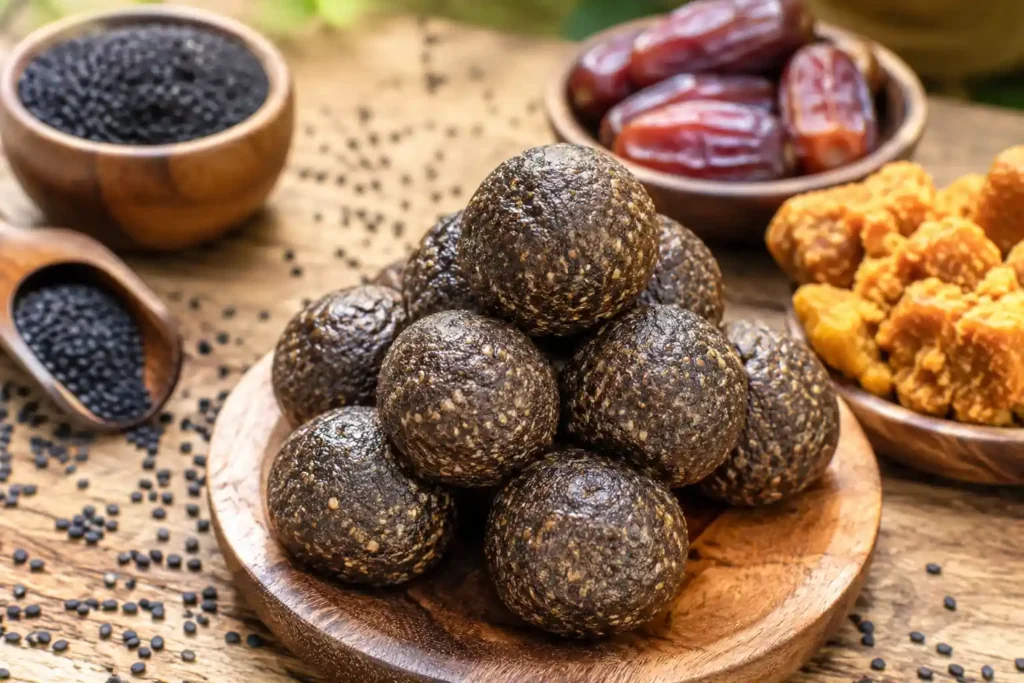
Most sweets give you a quick sugar rush and then disappear from the story. Niger seeds laddu sticks around a little longer.Made with roasted niger seeds, dates, and jaggery, this traditional recipe packs real nutrition into something that still tastes like a treat. The ingredients are simple. The preparation takes less than 30 minutes. And the result is rich, slightly nutty, and surprisingly satisfying.
If you’ve never heard of niger seeds, you’re not alone.
These tiny black seeds, scientifically known as Guizotia abyssinica, have been part of Indian food traditions for generations. In some regions they’re called ramtil. They’re commonly used for oil extraction, but they also work beautifully in homemade snacks and sweets.
What makes them worth paying attention to ?
Niger seeds contain iron, magnesium, zinc, potassium, healthy fats, and dietary fiber. Pair them with dates and jaggery, and you get a snack that delivers energy without tasting like health food pretending to be dessert.
What Are Niger Seeds ?
Niger seeds are small, black, teardrop-shaped oilseeds grown widely across India, Ethiopia, and parts of Africa. Farmers grow them mainly for oil extraction, but home cooks have used them in chutneys, podis, and laddus for decades, especially in central and western India.
The seeds carry a mild, nutty flavor once roasted. Raw, they taste bitter and slightly grassy, which is why roasting matters so much in this recipe.
Ingredients
| Ingredient | Quantity |
|---|---|
| Niger seeds | 150 g |
| Seedless dates | ½ cup |
| Grated jaggery | 1 cup |
| Cardamom powder | ½ tsp (optional) |
| Ghee | 1 tsp (optional) |
| Roasted sesame seeds | 1 tbsp (optional, for garnish) |
Prep time: 10 minutes
Cook time: 15 minutes
Total time: 25 minutes
Servings: 10 to 12 laddus
How to Make Niger Seeds Laddu
Step 1: Roast the niger seeds
Start with a dry pan on low heat. Add the niger seeds and roast them, stirring continuously. They’re small, and small things burn fast.
After 4 to 5 minutes, you’ll notice a nutty aroma. That’s your cue to stop.
Step 2: Cool and grind
Let the seeds cool completely before grinding. Warm seeds release oil too quickly in a grinder and turn into paste instead of powder.
Grind into a coarse powder. You don’t need a perfectly fine texture. A little bite makes the laddus better.
Step 3: Prepare the dates
Chop the dates into small pieces. If they feel hard or dry, soak them in warm water for 5 minutes first, then pat dry before chopping.
More Read
Step 4: Mix everything together
Add the ground niger seeds, chopped dates, and grated jaggery to a large bowl. Mix thoroughly using your hands so the natural stickiness of the dates binds the mixture. If it feels too dry, add a teaspoon of ghee. If it feels too soft, add a tablespoon of roasted sesame seeds or extra niger powder.
Step 5: Shape the laddus
Take small portions in your palm and roll them into round laddus. Press firmly so they hold shape. This recipe usually makes around 10 to 12 pieces, depending on size.
Why People Like Niger Seeds
Iron gets most of the attention, and for good reason. Iron helps your body make hemoglobin, the protein that carries oxygen through your bloodstream. When iron intake stays low for long periods, fatigue often follows. According to the National Institutes of Health, iron deficiency remains one of the most common nutritional gaps worldwide, particularly among women and teenagers.
Niger seeds also contain magnesium. Your muscles, nerves, and bones all use it. Many people don’t get enough magnesium from everyday diets. Then there’s zinc. Your immune system uses it constantly. It’s involved in cell growth, repair, and normal body function. And unlike heavily processed sweets, niger seeds still bring fiber to the table, which slows digestion and helps you feel full for longer.
Also read : Kharjur Laddoo Recipe – Healthy,Delicious
Health Benefits of Niger Seeds Laddu
A steady source of energy
Dates and jaggery provide natural carbohydrates. Niger seeds contribute healthy fats. Together they create a snack that feels substantial rather than empty. Many people enjoy one laddu before exercise or during the afternoon slump when coffee starts losing the argument.
Supports iron intake
Teenagers, athletes, and people with higher iron requirements often look for foods that naturally contain iron rather than relying only on supplements. Niger seeds fit that category well.
Helps you stay full longer
A biscuit disappears in two bites and leaves you hungry an hour later. A niger seeds laddu has enough fiber and fat to keep hunger away for much longer, making it a smarter snack choice between meals.
Good for active lifestyles
If your day includes workouts, sports, fieldwork, or long hours on your feet, a homemade laddu can be an easy addition to your routine, especially when packaged snacks feel inconvenient.
A natural alternative to refined sugar snacks
Because the sweetness comes from dates and jaggery rather than refined sugar, this laddu fits better into diets that are trying to cut down on processed sugar without giving up dessert entirely.
Who Should Try It ?
- Athletes and gym-goers
- Teenagers and growing children
- People looking for iron-rich foods
- Anyone reducing refined sugar intake
- Busy professionals who need quick, portable snacks
- Parents looking for homemade alternatives to packaged sweets
How Many Laddus Should You Eat?
For most adults, 1 to 2 laddus per day is plenty. They’re nutrient-dense and fairly calorie-rich. That’s part of their appeal, but portion size still matters, especially if you’re managing daily calorie intake.
Storage Tips
Keep them in an airtight container away from direct sunlight. At room temperature they’ll stay fresh for about 10 days. Refrigeration can extend that to around 2 weeks, especially during warmer months. Avoid storing them in humid conditions, since jaggery tends to absorb moisture and turn sticky.
Niger Seeds Laddu vs Other Common Laddus
| Laddu Type | Main Nutrient Focus | Sweetener Used |
|---|---|---|
| Niger seeds laddu | Iron, magnesium, fiber | Jaggery, dates |
| Til (sesame) laddu | Calcium, healthy fats | Jaggery |
| Besan laddu | Protein, carbohydrates | Sugar |
| Dry fruit laddu | Vitamins, antioxidants | Dates, honey |
This comparison shows why niger seeds laddu stands out specifically for iron content, making it a useful addition for people managing low iron levels.
Niger seeds laddu is one of those recipes that quietly does its job. No complicated ingredients. No fancy equipment. Just roasted seeds, dates, jaggery, and a few minutes in the kitchen.
You end up with a sweet that tastes good, travels well, and brings more nutrition than the average dessert. That’s a combination worth keeping around.
FAQ
What are niger seeds ?
Niger seeds are small black oilseeds from the plant Guizotia abyssinica. They’re commonly grown in India and parts of Africa, often known locally as ramtil.
Is niger seeds laddu healthy ?
Yes. It contains iron, magnesium, healthy fats, and fiber, making it a nutrient-rich homemade snack compared to most refined sugar sweets.
Can children eat niger seeds laddu ?
Yes. Most children can enjoy it in moderate amounts as part of a balanced diet, though portion size should stay smaller than for adults.
How long do niger seeds laddus last ?
Around 10 days at room temperature and up to 2 weeks when refrigerated in an airtight container.
Can I replace jaggery with another sweetener ?
You can experiment with date paste or coconut sugar, although the texture and flavor will change slightly.
Are niger seeds the same as nigella seeds ?
No. Niger seeds (Guizotia abyssinica) and nigella seeds (kalonji) are completely different plants with different flavors and uses. They’re often confused due to similar names.